
Last updated October 30, 2026
 Architectural shingles
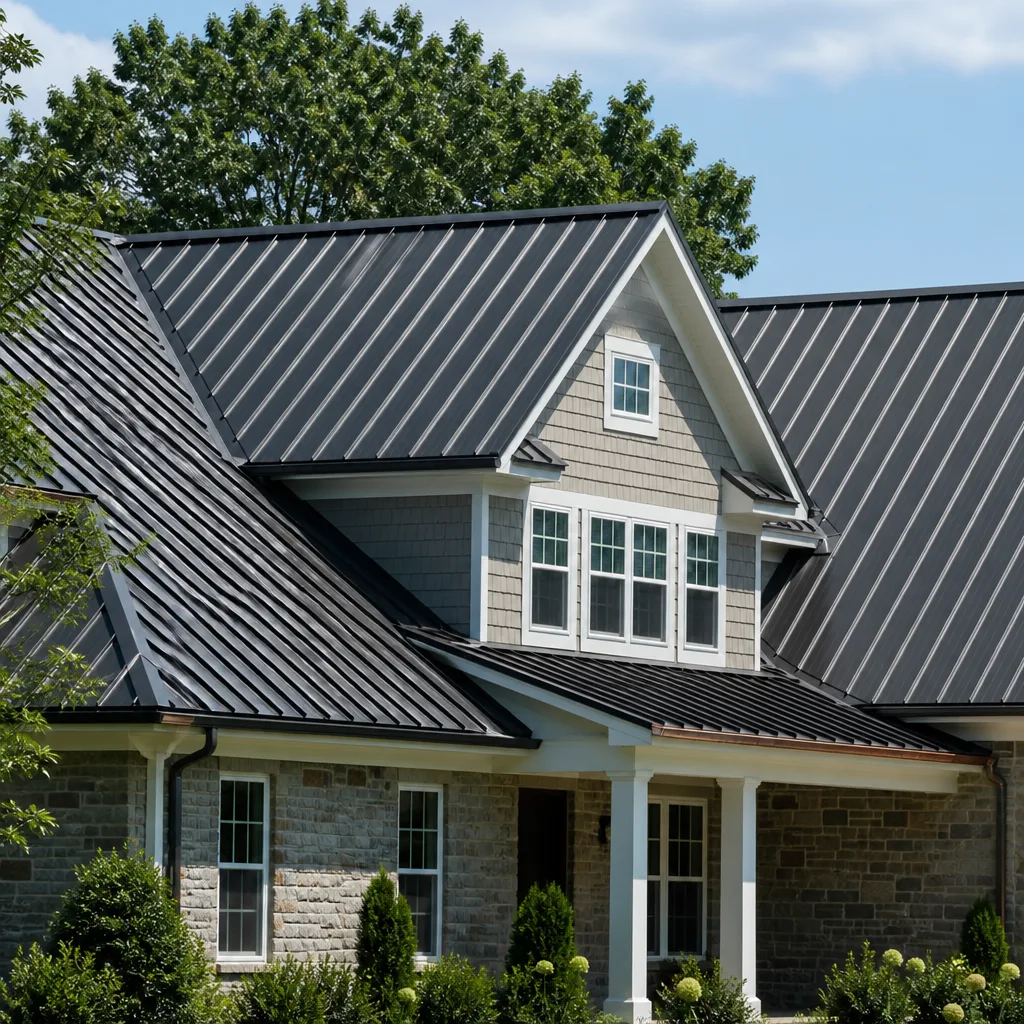 Metal roofing
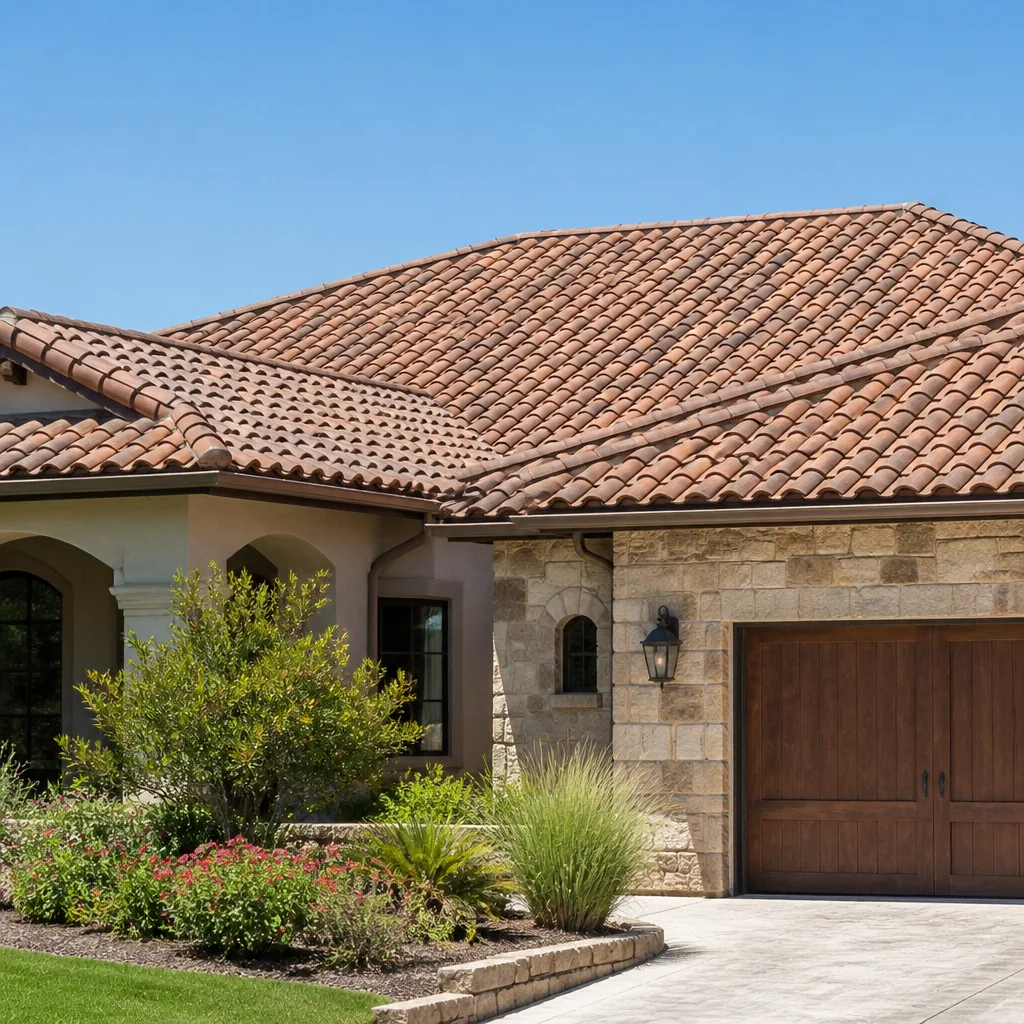 Tile roofing
 GAF
 Owens Corning
 Flat & low-slope
Free roof inspection with deck photos before we talk money - GAF and Owens Corning certified installation
Roof Repair Troubleshooting: Common Problems and How to Fix Them
The water stain on your ceiling is almost never where your roof is leaking. Water hits a breach in the roof, then travels along the underside of the sheathing, follows a rafter, hits a seam in the underlayment, and finally drips somewhere five, ten, even fifteen feet from the actual hole. Sending a contractor to patch the spot above the stain is how homeowners end up paying twice for the same leak. This guide is built for Moreno Valley homeowners who want to troubleshoot their roof problems the right way: symptom first, source second, fix third. You’ll learn how to trace damage backwards, what the warning signs actually mean, and which problems need immediate attention versus which can wait a season.
Styles & brands we work with
Quick Answer
Roof leaks are rarely located directly above the water stain on your ceiling, because water travels along sheathing, rafters, and underlayment before it drips. The most common roof problems in Moreno Valley homes include granule loss, cracked tiles, lifting ridge caps, stained fascia, and attic condensation, each with a distinct cause and fix. Start by tracing the symptom upward and sideways to find the true entry point, repair what’s urgent, and monitor what’s not.
Table of Contents
- How to Trace a Ceiling Stain to the Actual Roof Leak
- Granule Loss in Gutters: What It Means and When to Worry
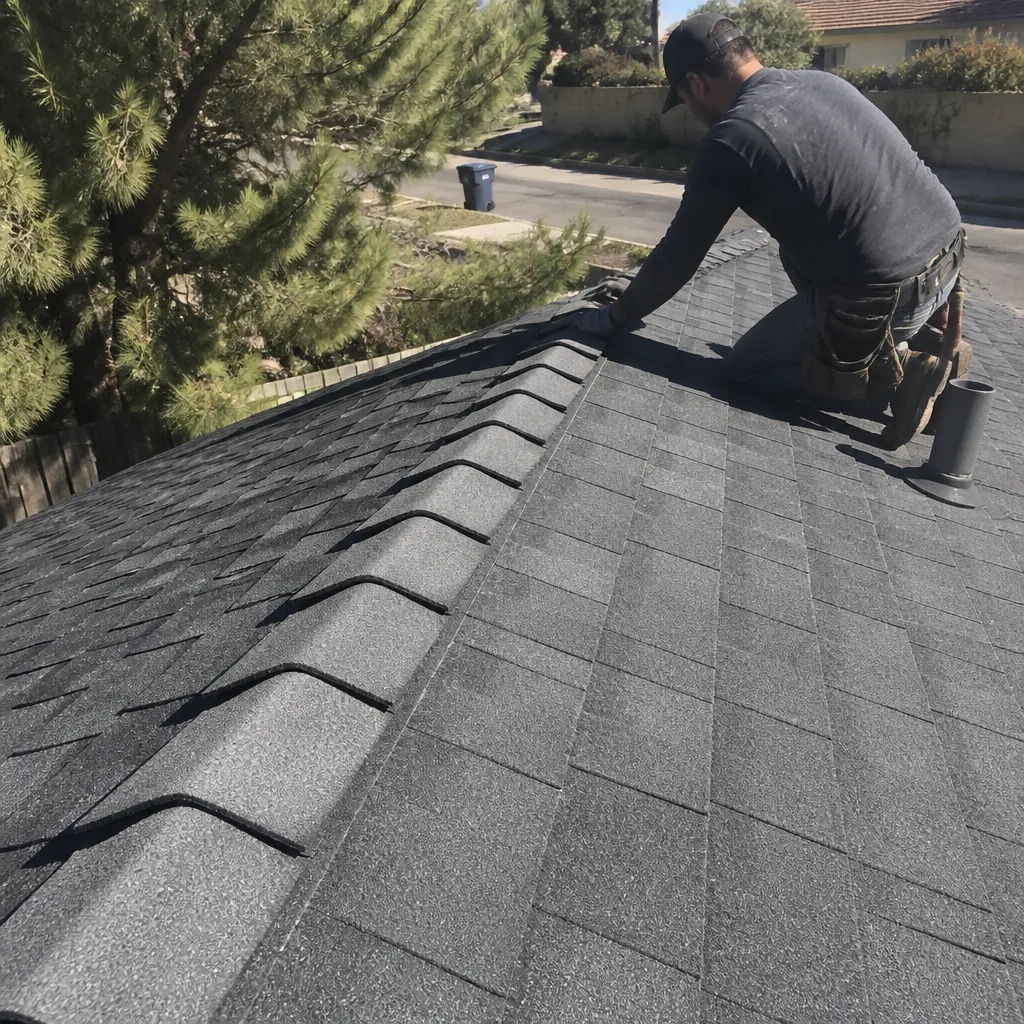
- Lifting Ridge Caps: A Small Problem With Big Consequences
- Stained Fascia Boards: Leak, Condensation, or Both?
- Attic Condensation: The Leak That Isn’t a Leak
- Cracked Concrete and Clay Tiles: What a Break Actually Means
- DIY-Safe Temporary Fixes vs. Problems That Need a Roofer
- How Different Roofing Materials Show Damage Differently
- Common Mistakes to Avoid
- When to Call a Professional
- Frequently Asked Questions
- The Bottom Line
How to Trace a Ceiling Stain to the Actual Roof Leak
Most homeowners look at a water stain and assume the breach is directly above it. That assumption is wrong more often than it’s right, especially in Moreno Valley homes built with truss roofs where the interior ceiling doesn’t follow the roof plane. Water enters at a penetration, runs horizontally along the top of a rafter or the underside of the sheathing, and only falls when it hits a seam, a nail, or a low point. The first step in any roof repair troubleshooting is to stop thinking vertically and start thinking in flow paths.
Here’s the tracing method we use when we’re called to a Moreno Valley home with an interior stain:
- Mark the stain. Measure its exact distance from two fixed reference points, like the nearest exterior wall and the nearest interior wall corner. You’ll need these measurements when you get into the attic.
- Find the stain in the attic. Go up with a flashlight and locate the wet or stained spot on the underside of the sheathing. Note that attic insulation often hides the wet area, so pull back insulation carefully in the zone above the room stain.
- Look upward and sideways. From the wet spot, shine the light along every rafter, truss chord, and sheathing seam that slopes toward that area. Water follows the underside of the sheathing, so any dark streak angled toward the stain is a lead.
- Follow the streak to its highest point. Walk your eyes along the streak backward, up the slope, until it ends. That upper terminus is usually within a foot or two of the actual breach.
- Check penetrations above that point. Look for roof vents, plumbing stacks, chimneys, skylights, and exhaust fan caps within that zone. In our experience, eight out of ten leaks in Moreno Valley originate at a penetration, not in open field shingles or tiles.
- Correlate with roof features. Valleys, sidewall flashings, and step flashing are the next most common breach points. If the streak points toward one of these, inspect there next.
Once you’ve found the probable entry point, you can make a smarter decision about the repair scope. If you’d rather have a professional confirm the diagnosis, a standalone Roof Inspection in Moreno Valley gives you a documented finding before you spend a dollar on repair or replacement.
Granule Loss in Gutters: What It Means and When to Worry
Finding granules in your gutters is normal during the first two to three years of a new asphalt shingle roof, because excess granules from manufacturing slough off during early rains. Finding granules in the gutters of a roof that’s ten or more years old is a different conversation. The question isn’t whether the shingles are losing granules, it’s how fast and where.
What granule loss actually tells you
Granules are the UV shield for the asphalt layer beneath them. When a shingle loses its granules, the asphalt is exposed to direct sunlight, and it dries out and cracks. Widespread granule loss across the whole roof signals age-related wear. Localized granule loss in one area signals a specific problem: hail strikes, foot traffic from an air conditioner technician or satellite installer, or water running down a valley at high volume like we see during Moreno Valley’s brief but intense storm seasons.
How to assess the severity
- Run your finger along the shingle surface. If it comes away with granules, the shingle is actively shedding. If the surface feels smooth and bare in spots, the shingle has already lost its protective layer.
- Check the shingle color. Bare asphalt shows through as dark, shiny patches. Those patches heat up faster and crack sooner.
- Look for piles, not just specks. Consistent light granule dust in the gutter is one thing. Piles accumulating at downspout elbows are another. Piles mean rapid shedding.
If the granule loss is isolated to one slope, a repair may buy you real time. If it’s roof-wide, you’re likely looking at replacement in the next couple of seasons. The brand on your roof matters here. GAF and CertainTeed shingles hold granules differently than value-tier products, and a multi-brand roofer can give you an honest comparison if replacement becomes the decision. Before you commit to anything, know what your roof actually needs.
Lifting Ridge Caps: A Small Problem With Big Consequences
The ridge cap is the finishing row of shingles or tiles that runs along the peak of your roof. It’s the first thing to catch wind, and in Moreno Valley’s dry heat, the adhesive strips on ridge shingles cook and fail faster than field shingles. A lifting ridge cap looks like a minor cosmetic issue from the street. It isn’t.
Why a lifted ridge cap matters
When a ridge cap lifts, it creates a direct opening for wind-driven rain to enter the attic. The gap doesn’t have to be large. A quarter-inch lift is enough for wind to push water sideways and under the cap. Once water gets past the ridge line, it runs along the underside of the sheathing on both slopes, which means the stain can appear far from the peak, on either side of the house. Lifting ridge caps also make your roof vulnerable to wind uplift. The cap is the aerodynamic leading edge, and if it peels, the wind gets a purchase and can peel more.
What to do
- Inspect after high-wind events. After a santa ana wind event in Moreno Valley, walk the perimeter or use binoculars to check the ridge line. Look for caps that are no longer lying flat.
- Check from the attic. On a bright day, look along the ridge from inside. If you can see daylight at the peak, water can get in.
- Don’t apply roofing cement to shingle ridge caps as a long-term fix. Cement dries, cracks, and fails in Moreno Valley’s heat. It’s a temporary patch at best, and it can trap water behind it.
- Replace the affected cap shingles or tiles. The actual fix is removing the lifted cap, checking the underlayment beneath, and installing new caps with proper fasteners and adhesive.
Ridge caps are cheap to replace individually. Ignoring them is expensive. A full ridge cap failure is one of the easiest roof problems to prevent early, and one of the most common sources of leak calls we see in Moreno Valley after wind season.
Stained Fascia Boards: Leak, Condensation, or Both?
The fascia board is the vertical board that runs along the roofline, the one your gutters are mounted to. When it develops dark water stains, homeowners usually assume their roof is leaking. Sometimes that’s true. Sometimes the stain comes from a gutter problem. Sometimes it’s condensation. Learning to tell the difference saves you money, because the fixes are nothing alike.
Three causes of fascia staining
- Gutter overflow or leak. If gutters are clogged, water spills over the back edge and runs down the fascia. If gutter seams have separated, water drips directly onto the board. The stain will be concentrated under the gutter line and widest where the clog or seam sits.
- Drip edge failure or absence. The drip edge is a metal flashing strip that directs water from the roof edge into the gutter. If it’s missing, damaged, or improperly installed, water wicks backward onto the fascia. The stain will be confined to the top edge of the board, right under the shingle overhang.
- Roof leak above the eave. A leak in the first few feet of roofing above the eave will run down and soak the fascia from the top. The stain pattern typically extends upward into the soffit. If you see staining on the soffit underside as well as the fascia face, the leak is in the roof, not the gutter.
The fix depends on the cause. Gutter issues require gutter cleaning or seam repair. Drip edge issues require new flashing. Roof leaks require the full tracing method we covered earlier. In Moreno Valley’s dry climate, fascia stains are sometimes ignored for years because the wood doesn’t rot as fast as it would in a humid climate. But stain still means intermittent wetting, and wetting eventually rots the board and the rafter tails behind it.
Attic Condensation: The Leak That Isn’t a Leak
Every winter, roofing companies in Moreno Valley get calls from homeowners who are certain their roof is leaking because they found water in the attic. The water is dripping off the underside of the sheathing, staining the insulation, and occasionally making it to the ceiling. Then we get into the attic and find no breach. The real problem is condensation, and it’s a ventilation and air-sealing issue, not a roofing issue.
How to tell condensation from a roof leak
- Timing. Condensation appears during cold snaps and disappears in warm weather. Roof leaks often appear during or after rain. If your attic water is worse on cold clear nights, it’s condensation.
- Pattern. Condensation is diffuse. It coats broad areas of sheathing, nails, and straps with moisture. A roof leak is localized. It stains a specific area and usually traces back to a single point.
- Nail frost. On cold mornings, condensation shows up as frost on the roofing nails poking through the sheathing. That’s a signature indicator of high attic humidity meeting cold surfaces.
What causes attic condensation in Moreno Valley homes
Moreno Valley sits inland enough that winter nights drop below freezing, especially in the hillside neighborhoods. Warm air from the living space rises into the attic through gaps around ceiling fixtures, attic hatches, and partition wall tops. When that warm humid air hits the cold underside of the roof sheathing, it condenses. Homes with inadequate attic ventilation, or with bathroom and kitchen exhaust fans dumping into the attic instead of through the roof, get it worst.
The fix
- Air-seal the attic floor. Seal around can lights, ceiling fans, junction boxes, and the attic hatch with approved sealants and weatherstripping.
- Ensure exhaust fans vent outside. Confirm every bathroom fan and the kitchen range hood exhausts through a roof jack or wall vent, not into the attic.
- Balance attic ventilation. Intake at the eaves and exhaust at or near the ridge. If you have only one type, you have a problem.
Condensation is a good reason to schedule a Roof Inspection in Moreno Valley if you’re unsure which problem you have. We’d rather tell you it’s a ventilation fix than sell you a repair you don’t need.
Cracked Concrete and Clay Tiles: What a Break Actually Means
Moreno Valley has a lot of concrete and clay tile roofs, especially in neighborhoods built in the 1980s and 1990s. Tile roofs are durable, but they crack for specific reasons. A cracked tile is not automatically a leak. It depends on where the crack is, how wide it is, and what’s underneath.
Why tiles crack
- Impact. Foot traffic from workers, falling tree branches, or hail. Concrete tile cracks under point loads it was never designed to take.
- Thermal movement. Clay and concrete tiles expand and contract. Poorly fastened tiles can’t move, so they crack from internal stress.
- Freeze-thaw. In Moreno Valley neighborhoods that drop below freezing on winter nights, small amounts of water in tile pores and microfractures freeze, expand, and widen the crack over repeated cycles.
- Age and wear. Older concrete tiles lose strength. They simply give out one day under load or thermal stress.
Does a cracked tile leak?
Here’s what most homeowners don’t know: the tile is the wear layer, not the waterproofing layer. On a properly installed tile roof, the waterproofing comes from the underlayment beneath the tiles. A cracked tile sheds most water by gravity, and the underlayment catches what gets through. So a single hairline crack rarely leaks. A broken tile with a missing piece, or a crack wide enough to expose the underlayment to direct sun, is a different story. Once underlayment is exposed and degrades, leaks begin.
The fix
Replace cracked tiles individually when possible. If you have a concrete tile roof and matching tiles are no longer made, options include blending new tiles, salvaged tiles, or in some cases a full reroof if the tile stock is too degraded and underlayment is failing. Boral is one of the major concrete tile manufacturers, and homeowners with Boral tile roofs often have better access to matching replacements than homeowners with discontinued profiles. If replacement becomes a full-scope decision, get a brand-honest assessment before you proceed.
DIY-Safe Temporary Fixes vs. Problems That Need a Roofer
Some roof problems can be safely addressed by a homeowner in the time between discovering a leak and getting a contractor scheduled. Others get dramatically worse when a non-roofer touches them. The line between the two matters.
What’s safe to do yourself
- Install a tarp over an active leak. This is the gold standard temporary fix. A properly secured tarp keeps water off the roof until repairs can be made. Anchor it with 2x4s and screws, not bricks or sandbags, and extend it over the ridge by at least four feet so wind-driven rain can’t get under it.
- Clear debris from a roof valley. If a valley is clogged with leaves and causing water to back up under the shingles, clearing it is safe if you can reach it from a ladder or with a roof rake. Don’t walk the valley.
- Apply roofing cement to a small flashing gap. A quarter-inch gap around a pipe boot or vent collar can be sealed temporarily with a quality roofing cement or a patch kit. This is a stopgap, not a permanent fix, but it can hold for a season.
- Clean gutters and downspouts. A clogged gutter backs water up into the eave. Cleaning it out is safe from a ladder and solves a real problem.
What you should not do yourself
- Do not walk a tile roof. Concrete and clay tiles crack under foot traffic if you don’t know how to distribute weight. We see more damage from well-intentioned homeowners walking tile roofs than from actual storms.
- Do not nail through shingles as a repair. Every nail hole you add is a new potential leak. Shingle repair requires lifting and resealing, not nailing through the face.
- Do not apply spray sealants or roof coatings to the entire roof surface. These products trap moisture, accelerate shingle degradation, and void manufacturer warranties. We’ve had to reroof homes where a full-surface sealant was applied to a leaky area.
- Do not work on a roof you can’t safely access. Steep pitches, two-story homes, and wet or windy conditions all change the risk calculation. A fall costs more than any repair.
If you’re unsure which category your problem falls into, call us at (866) 217-3967. We’ll tell you over the phone whether a tarp will hold until we can schedule a proper Roof Repair in Moreno Valley.
How Different Roofing Materials Show Damage Differently
Concrete tile doesn’t fail the way asphalt shingles fail. A composite shingle doesn’t fail the way wood shake fails. Knowing the difference means you can spot problems early on your own roof, and you won’t misread normal material behavior as damage. Roof replacement and repair choices in Moreno Valley span multiple materials, and honest material guidance depends on understanding how each one dies.
Asphalt shingles
Asphalt shingles fail from granule loss first, then cracking and cupping. Blistering, where small bubbles form on the shingle surface, is common on Moreno Valley roofs that get full afternoon sun. Blisters are mostly cosmetic until they pop, at which point they leave craters where water can pool and freeze. Curling shingle edges are a classic sign of age and heat. If your shingles are curling, granule loss is usually advanced, and repair is practical only in isolated areas.
Concrete tile
Concrete tile fails from cracking, spalling, and underlayment degradation. Surface spalling, where thin flakes of the tile face pop off, is a sign of moisture intrusion into the tile body. A little spalling is cosmetic. Widespread spalling means the tiles are absorbing too much water and degrading structurally. Underlayment on a tile roof has a service life of roughly 30 years for older felt products, 40 to 50 for modern synthetics. When the underlayment goes, the whole roof needs a re-lay, not individual tile replacement.
Clay tile
Clay tile is brittle. It doesn’t spall like concrete. It cracks cleanly or breaks. A cracked clay tile is often sharp-edged and obvious. Clay tile also fades in a different pattern than concrete, and the color change is aesthetic, not structural. The roofing system beneath the tile, the underlayment and flashing, matters more than the tile itself for waterproofing.
Composite and synthetic
Composite shingles from brands like Tamko and Atlas carry long warranties and are designed for impact and UV resistance. They don’t granule-shed the way asphalt does. The thing to watch is fastener failure and edge lifting, especially on windy exposures. A composite roof that’s underperforming usually has installation issues, not material issues, which is why the installer matters as much as the product.
Material choice is a genuine decision point for Moreno Valley homeowners facing replacement. If you’re comparing GAF Timberline against Owens Corning Duration, or Boral tile against Atlas composite, a roofer who installs all of them can give you the actual difference on your actual roof. We install materials from seven manufacturers, so our recommendation is driven by your home, not our inventory. The right material for your roof isn’t the most expensive one. It’s the one matched to your climate, your home, and your timeline.
Common Mistakes to Avoid
- Assuming the stain is the leak location. The whole premise of this guide: water travels. If you patch the spot above the ceiling stain without tracing the source, you’ll be back on the phone in a few weeks. Moreno Valley homes with vaulted ceilings are especially prone to this misdiagnosis because there’s no attic access to verify.
- Ignoring granule loss because “shingles always shed.” Light shedding in year one is normal. Heavy shedding at year twelve is not. Granule loss is the earliest reliable signal that your shingle roof is aging out.
- Painting over water stains on the ceiling. The stain will return if the leak isn’t fixed, and by the time it shows through the paint again, the damage behind the drywall will be worse. Fix the leak, then paint.
- Caulking the bottom edge of shingles. Water travels under shingles by capillary action. Sealing the bottom edge traps moisture behind the sealant and accelerates shingle failure. This is one of the most common DIY mistakes we see on Moreno Valley roofs.
- Walking a tile roof to “take a look.” Every step on a concrete or clay tile roof risks cracking tiles that weren’t cracked before. If you need eyes on the roof, use binoculars from the ground or call for a professional inspection.
- Replacing the roof when a repair would do. Not every leak means replacement. A flashing failure around a pipe boot is a $200 repair, not a $15,000 reroof. A contractor who leads with replacement before diagnosing the specific failure isn’t solving your problem, they’re solving their revenue goal. Repair when repair makes sense, replace when it doesn’t.
- Assuming a home warranty will cover the roof. Most home warranty companies exclude or severely limit roof coverage, and they’ll pay the lowest-bid patch rather than the correct fix. Read the fine print before you waste a service call fee.
When to Call a Professional
Some roof problems are obvious and urgent. A leak during a storm, water running down an interior wall, or a visible hole in the roof are not situations to troubleshoot from the ground. But the less obvious problems benefit from professional eyes too. If you’ve traced a ceiling stain and can’t find the source, if your granule loss is roof-wide, if your fascia is stained and you can’t tell whether it’s gutter or roof, if your attic is wet and you can’t tell whether it’s condensation or leak, or if you’re planning to sell and need to know what a buyer’s inspector will flag, that’s when a professional diagnosis pays for itself. Moreno Valley Roof Repair offers free estimates in Moreno Valley, including standalone Roof Inspection in Moreno Valley with no obligation to purchase repair or replacement services. Call (866) 217-3967 to schedule yours.
Frequently Asked Questions
Roof repair costs in Moreno Valley range widely depending on the problem. A minor flashing repair or pipe boot replacement typically runs $200 to $400. Replacing a few cracked tiles costs $150 to $300 per tile area. Repairing a leaking valley or step flashing runs $500 to $1,200. A full ridge cap replacement costs $800 to $1,500 depending on the roof length. These are ballpark ranges.
Repairs in Moreno Valley can also come with higher costs if the roof is a two-story tile roof requiring special access. Call (866) 217-3967 for an exact quote. Estimates are free.
No. The water entry point is on the exterior of the roof, and any interior patch is temporary at best. You can manage the symptom from inside by containing drips and keeping the area dry, but the fix has to happen on the roof surface. Some homeowners ask about spraying sealant into the attic onto the underside of the sheathing. That doesn’t work. The water is entering from above, and it will find another path.
A properly executed flashing repair, tile replacement, or shingle patch typically lasts 10 to 15 years, but the surrounding roof continues to age. A repair extends the life of the roof for its specific failure point. It doesn’t reset the clock on the whole roof. If your roof is at 80 percent of its expected lifespan, the repair might last longer than the remaining roof around it. Call (866) 217-3967 for an assessment of whether repair or Roof Replacement in Moreno Valley is the better move for your specific roof.
It shouldn’t, if the contractor does a proper diagnosis first. The reason prices change mid-job is usually that the scope was poorly assessed at the estimate stage. A roofer who does a real inspection before quoting should be able to tell you what’s wrong, what it takes to fix it, and what it costs. The estimate should account for what might be found once materials are lifted. Ask for a written line-item quote and ask what happens if hidden damage is found. A straight answer is a good sign. Moreno Valley Roof Repair provides written quotes with no change orders for misdiagnosed scope.
For most roof repairs, no permit is required. For replacement, Moreno Valley requires a building permit and inspection. The city enforces California Title 24 and Moreno Valley municipal code for roofing. A licensed contractor should handle the permitting and schedule the inspection as part of the project. If a contractor offers to reroof your home without a permit, walk away. It creates liability for you when you sell. If you’re unsure whether your job needs a permit, call (866) 217-3967 and we’ll tell you based on the scope you’re describing.
We can make an educated assessment over the phone if you can describe the symptoms accurately, and we’ll tell you honestly whether a site visit is needed. But a real diagnosis requires eyes on the roof. Attic inspection, roof surface inspection, and sometimes moisture testing are how you know the difference between a repair and a replacement. That’s why we offer Roof Repair in Moreno Valley and standalone inspections. Know what your roof actually needs before spending a dollar on repair or replacement.
The Bottom Line
Roof problems in Moreno Valley follow patterns. Ceiling stains are rarely where the leak is. Granule loss tells you the shingles are aging. Ridge caps lift in wind and heat. Fascia stains come from gutters, drip edges, or eaves. Attic condensation mimics leaks in winter. Cracked tiles don’t automatically leak until the underlayment fails. Learn to read the symptoms backward, and you’ll make better decisions about repair versus replacement. When in doubt, a professional inspection is cheaper than the wrong repair. Seven leading brands, one straightforward recommendation. If you’re troubleshooting a problem you can’t fully diagnose, Moreno Valley Roof Repair home offers free estimates and honest scope-matching. Call (866) 217-3967 and we’ll help you figure out what your roof actually needs.
Written by the team at Moreno Valley Roof Repair, serving Moreno Valley since 2013.
See the difference
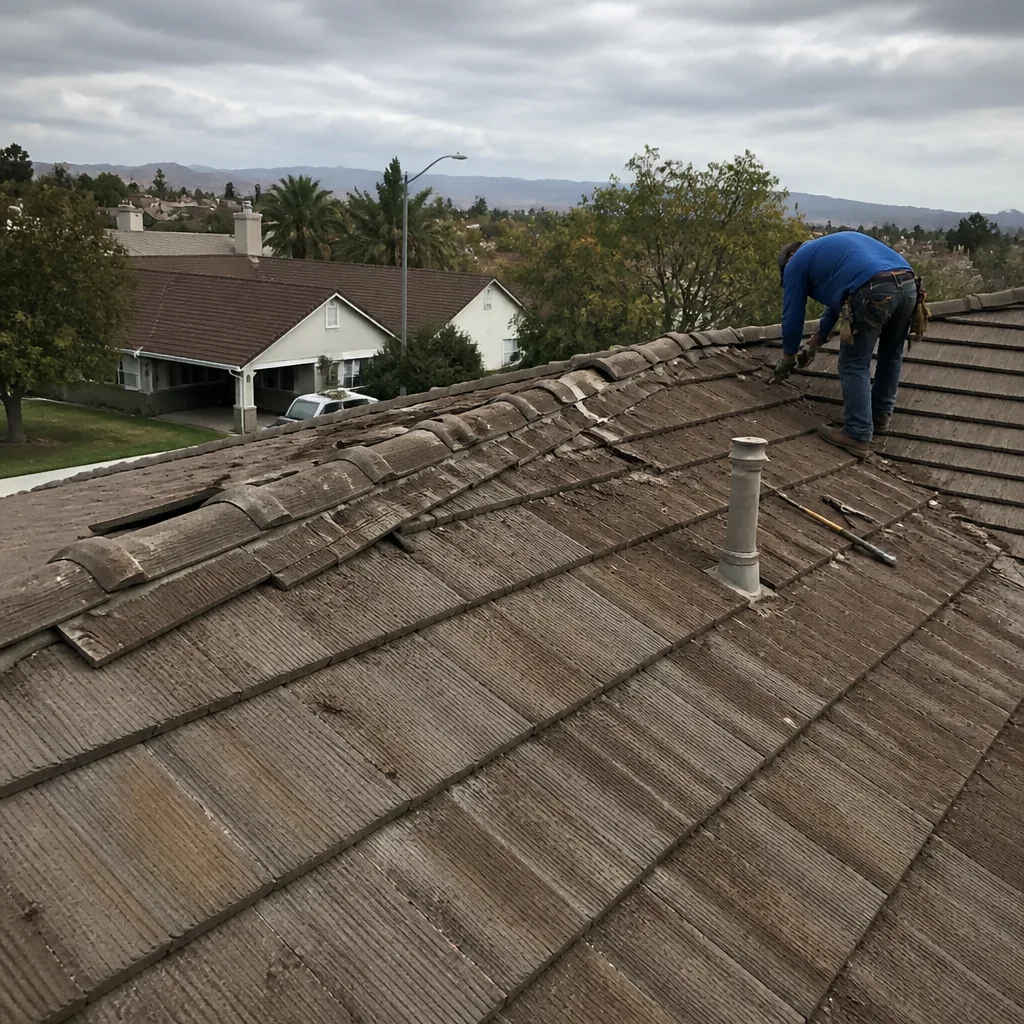 Before
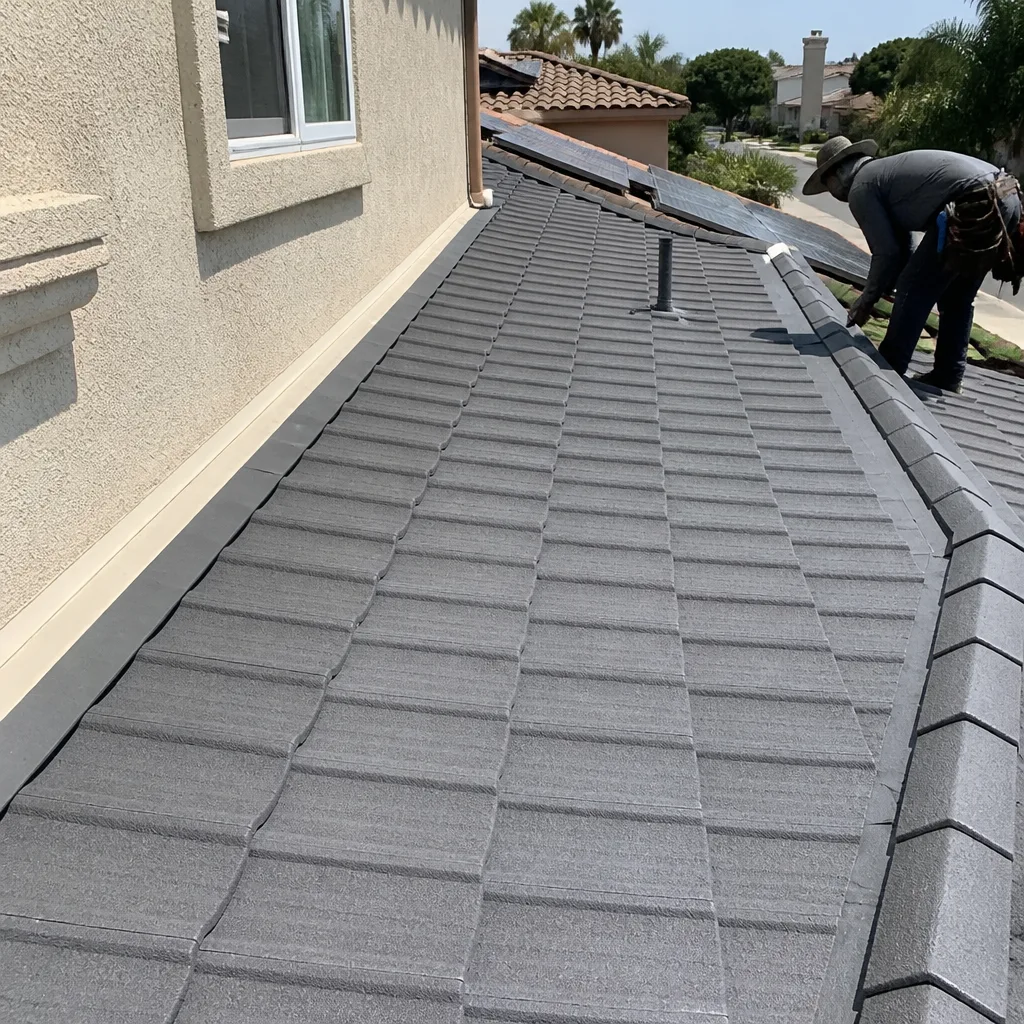 After
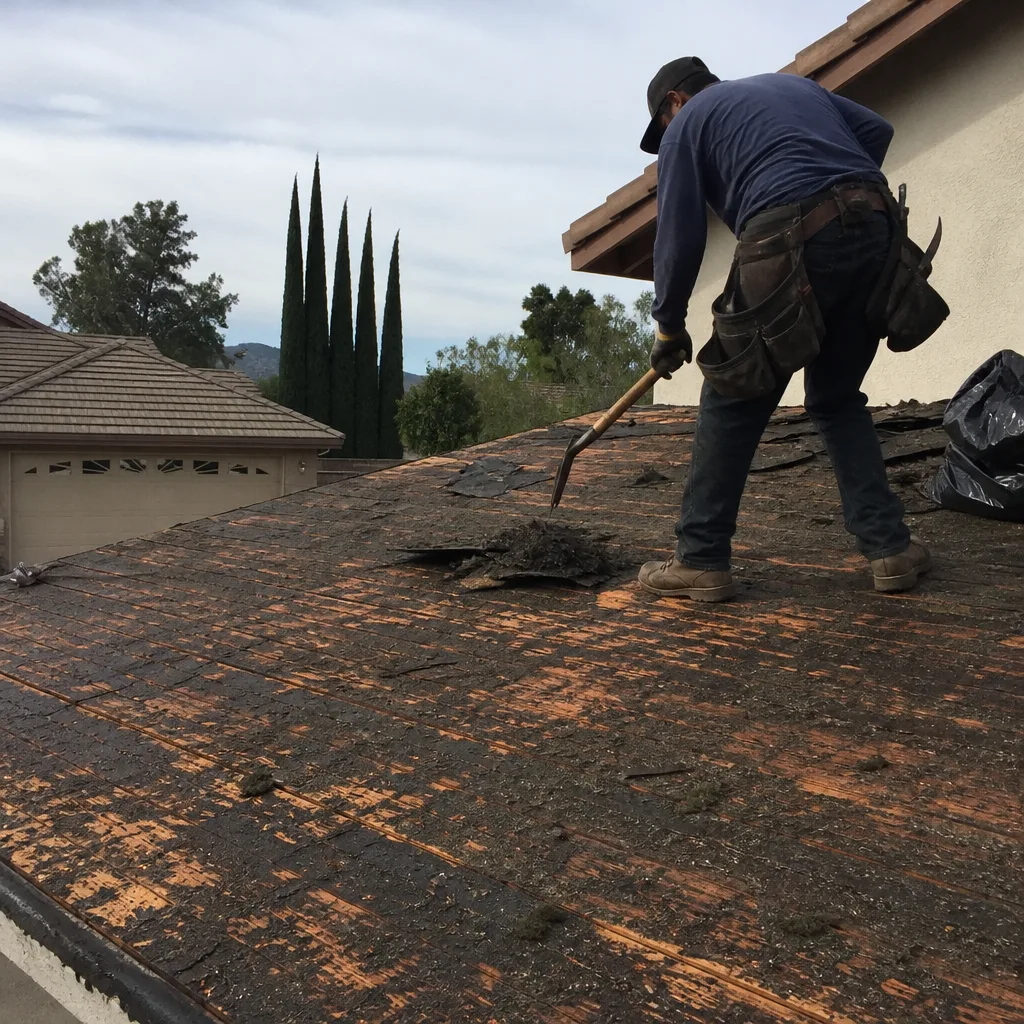 Before
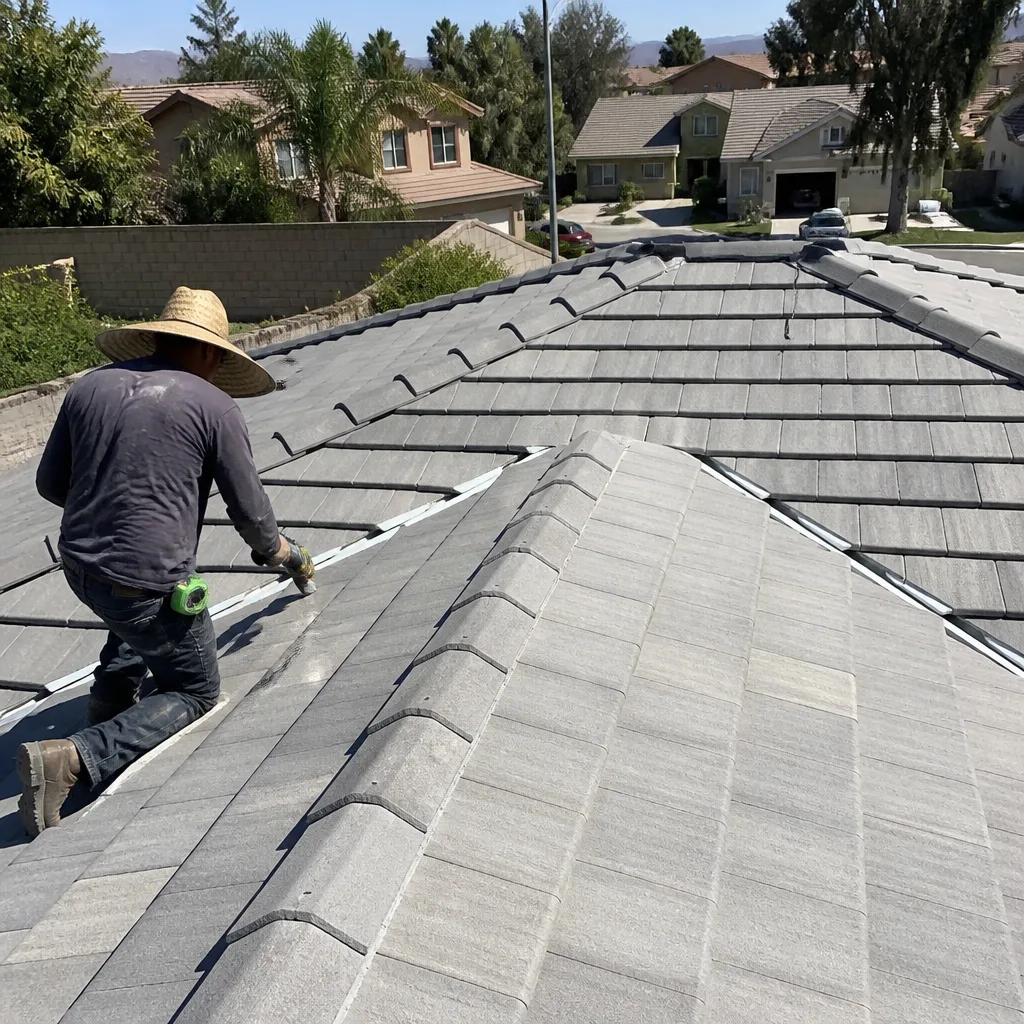 After
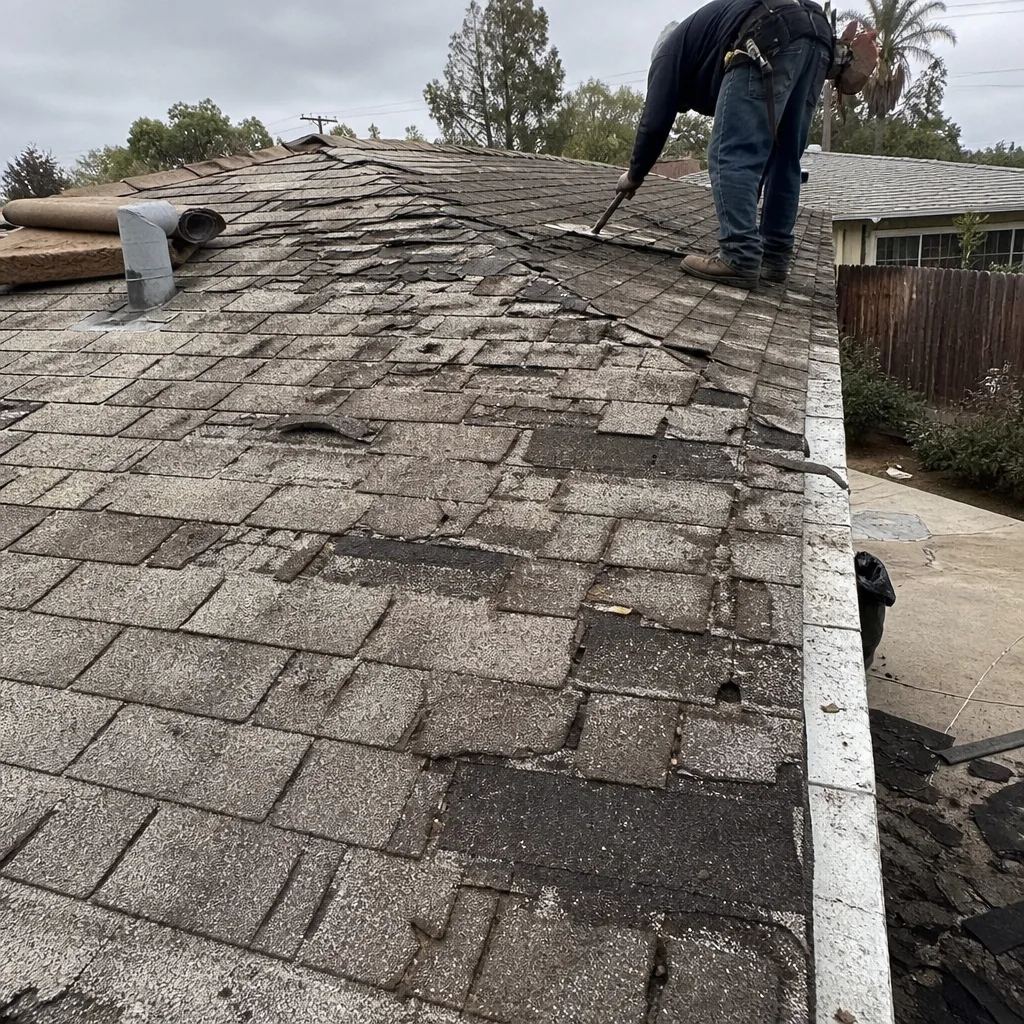 Before
 After