
Last updated October 30, 2026
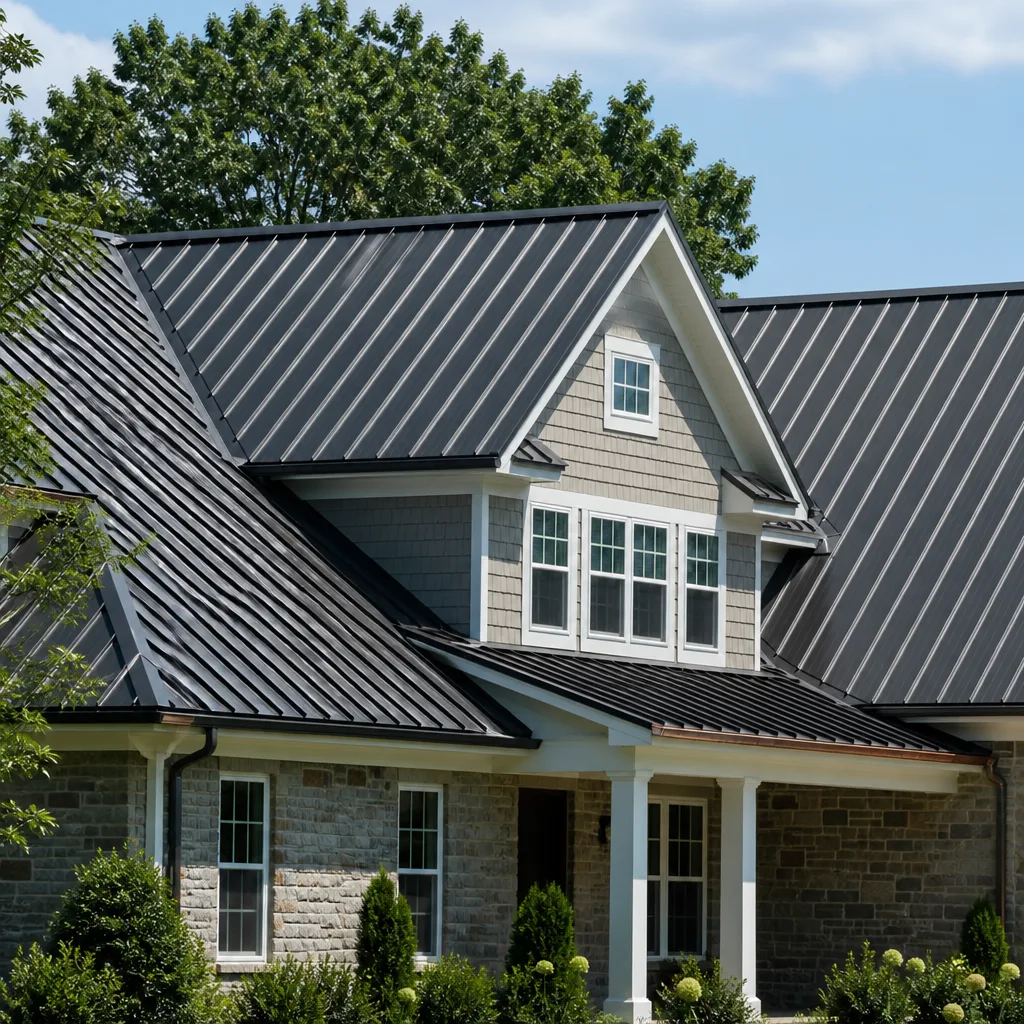 Metal roofing
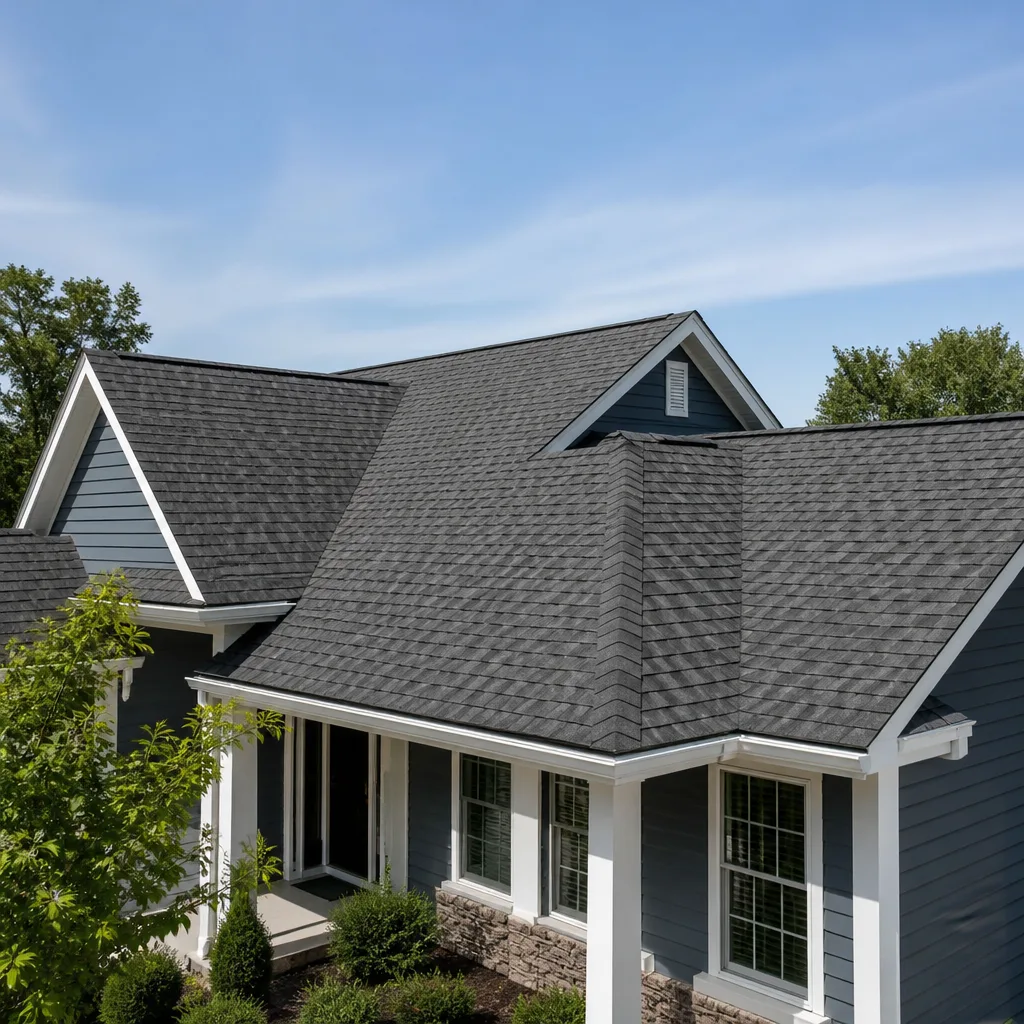 Architectural shingles
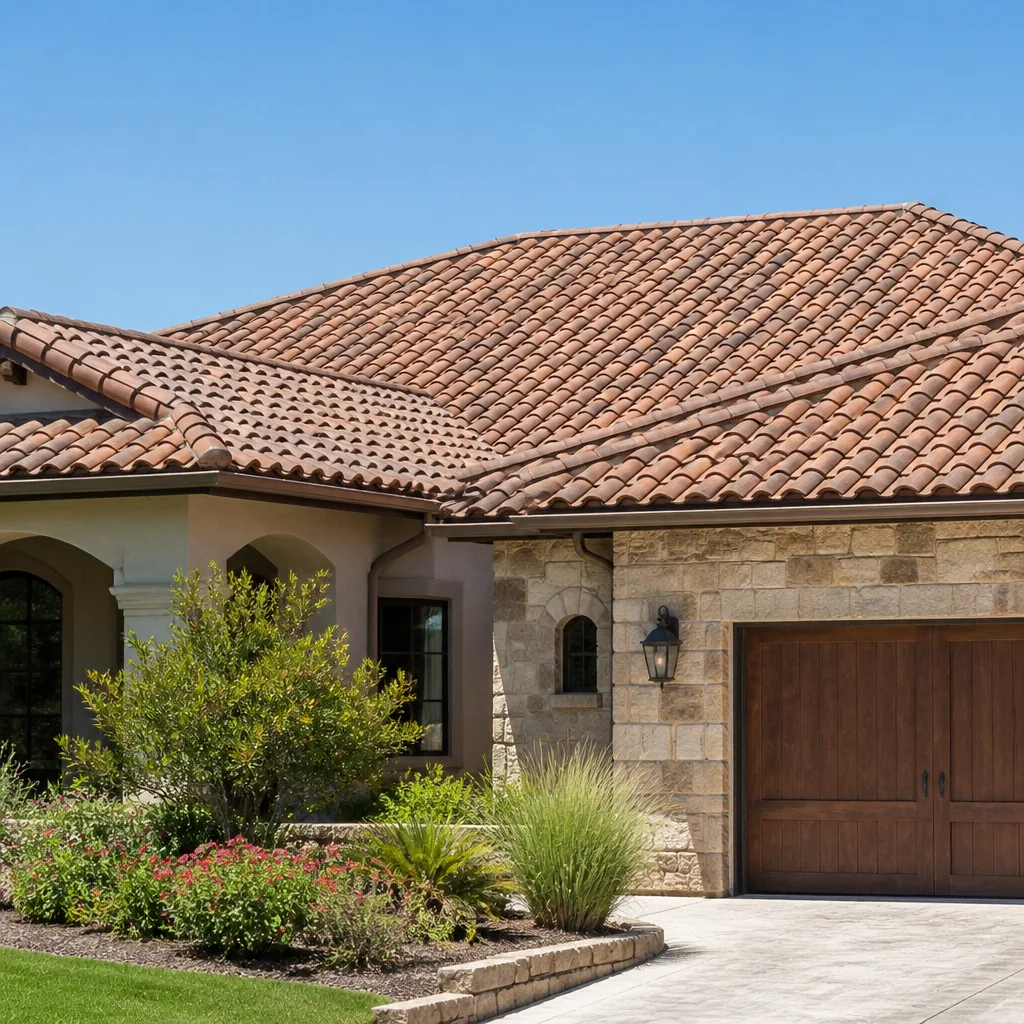 Tile roofing
 GAF
 Owens Corning
 Flat & low-slope
Free roof inspection with deck photos before we talk money - GAF and Owens Corning certified installation
DIY vs Professional Roofing: The Moreno Valley Homeowner’s Decision Guide
California law lets any homeowner act as their own general contractor, pull permits, and reroof their own house. What the law doesn’t tell you is that your insurance company keeps records, and when you file a claim for water damage three years after a DIY patch fails, the adjuster’s first question is who touched that roof last. We’ve rebuilt enough homeowner repairs in Moreno Valley to know this guide is overdue, and we publish more guides & resources like it for local homeowners. You’ll learn exactly which repairs a prepared homeowner can handle, which ones leave a paper trail that haunts a future sale, and where the real money gets lost in the DIY experiment. If you live in Moreno Valley and you’re weighing a ladder against a phone call, read this first.
Styles & brands we work with
Quick Answer
Most Moreno Valley homeowners can safely handle minor maintenance like clearing drains, replacing cracked pipe boots, and resealing small exposed flashing edges, but any repair involving underlayment, membrane seams, structural decking, or permit-required reroofing should go to a licensed professional. If you’re unsure where your project falls, our How to Hire a Roofing Contractor in Moreno Valley: A Step-by-Step Guide walks through the decision process. The deciding factors are heat-cycling durability, insurance liability, and California’s owner-builder disclosure rules. If a failed repair leads to interior water damage, your insurer may deny the claim based on unpermitted work.
Table of Contents
- What Moreno Valley Homeowners Can Reasonably Do Themselves
- The Repairs That Need Technique, Not Just Tools
- California Owner-Builder Permits: The Reality Nobody Explains
- Why Flat and Low-Slope Roofs Punish DIY Work More Than Sloped Shingle Roofs
- The Real Cost Comparison: DIY vs Professional Repair in Moreno Valley
- How to Watch a Roofing Video and Know It Wasn’t Filmed for Your Climate
- When to Call a Professional
What Moreno Valley Homeowners Can Reasonably Do Themselves
Not every roof task requires a contractor. A homeowner with basic tool competence, a stable ladder, and good weather awareness can handle a handful of maintenance items without risking the roof’s integrity. The key distinction is this: if the task involves cleaning, tightening, or sealing an exposed surface without peeling back layers, it’s usually fair game. Once you’re removing shingles, cutting into membrane, or exposing underlayment, you’ve crossed into work that impacts the roof’s water-shedding sequence.
Here’s what we consider reasonable DIY territory for a prepared Moreno Valley homeowner:
- Clearing roof drains and scuppers before winter rains. Moreno Valley’s dry summers deposit dust, leaves from nearby eucalyptus, and fine debris into drains. Clogged drains are the number one cause of ponding water on flat roofs. You’ll need a leaf blower, gloves, and a push broom. Stay off steep pitches.
- Replacing a cracked pipe boot. The rubber collar around plumbing vents bakes and cracks in Inland Empire heat, usually within 4-6 years. A replacement boot costs $15-$30 at any supply yard. The job takes 30 minutes if the pipe is accessible. No underlayment gets exposed.
- Resealing exposed flashing edges. Where flashing meets stucco or chimney brick, sealant eventually pulls away. Scraping the old bead and running a fresh line of urethane-based sealant is straightforward. You’re not removing the flashing, just refreshing the seal at the surface.
- Replacing a visible, accessible shingle. If you can see the damaged shingle from a ladder, the roof pitch is walkable, and it’s a warm day so the shingle is pliable, you can lift the tabs and swap one. But we’d limit this to one or two shingles on a slope you’re comfortable standing on.
What all these tasks share is a low consequence of failure. If the pipe boot leaks again, you’ll see it. If the sealant fails, it’s visible. You haven’t opened the roof system.
The Repairs That Need Technique, Not Just Tools
Some roofing work fails not because the homeowner lacked tools, but because the work has to be done in a specific sequence to survive heat cycling. The Inland Empire sees summer roof surface temperatures above 160°F and winter nights near freezing. Materials expand and contract dramatically. A repair that looks fine in October can open a seam by July because the substrate wasn’t prepped correctly or the adhesive wasn’t the right chemistry for the temperature range.
Here are the repairs where technique determines whether the fix lasts one season or ten:
- Shingle repairs near valleys, ridges, or transitions. These areas direct water flow. Getting the shingle overlap direction wrong sends water sideways into the underlayment. A mismeasured valley shingle looks fine from the ground and leaks into the fascia within months.
- Membrane patch work on flat or low-slope roofs. Torch-down and modified bitumen roofs need clean, dry substrate, proper primer, and correct roll direction. Peel-and-stick patches applied to a dusty, oxidized surface peel back in the first heat wave. Homeowners frequently skip the primer step because the YouTube video didn’t show it.
- Flashing replacement at roof-to-wall transitions. This requires cutting into stucco, inserting the flashing leg, and re-sealing. Done wrong, water gets behind the stucco and runs down the wall cavity. By the time you see the stain, the framing is saturated.
- Underlayment repair under composition shingles. Any time you peel back shingles far enough to see the underlayment, you need to know whether what you’re looking at is still functional. Moreno Valley’s UV exposure degrades older asphalt-saturated felt faster than coastal climates. We’ve seen DIY repairs where a homeowner replaced shingles over felt that crumbled when touched.
- Roof decking replacement. If plywood or OSB is soft, spongy, or delaminated, that section needs to come out. This is structural work. Patching it without checking the framing underneath is like painting over rot on a window sill.
The pattern is consistent: the riskiest DIY work is anything that opens the roof’s protective layers. Surface-level fixes have low stakes. Layer-penetrating fixes have stakes you won’t see until the ceiling stains.
California Owner-Builder Permits: The Reality Nobody Explains
California Health and Safety Code Section 7031.5 lets a homeowner act as owner-builder, pulling permits and performing work on their own residence without holding a contractor’s license. Seen from the permit counter, it’s a simple path. Seen from a real estate transaction three years later, it’s a disclosure obligation and maybe a negotiation liability.
Here’s how it works in practice for roofing work in a city like Moreno Valley:
- You can pull a permit as an owner-builder. The city processes the application the same way it would for a licensed contractor. You’ll pay permit fees based on project valuation, and you’ll need to pass inspections at the same stages: decking, underlayment, and final.
- You must sign an owner-builder declaration. This states you’re doing the work yourself, not using unlicensed labor disguised as a homeowner project. Lie about hiring a crew off Craigslist, and both you and the crew can face penalties.
- The permit follows the property. When you sell, the disclosure package includes any permits pulled during your ownership. A buyer’s inspector will compare the permit history against the roof condition. Mismatches get flagged.
- Your insurance underwriter can ask. Insurance companies don’t need a reason to non-renew in California for the most part. If they learn of a major roof replacement performed by the homeowner, they may request documentation, reinspection, or adjust coverage terms. The work might be perfect. The paperwork question still comes up.
The honest read: pulling an owner-builder permit for a full reroof of a single-family home in Moreno Valley is legal and possible, but it puts the entire project on your shoulders. Permits, materials, sequencing, inspections, and the call to the supply yard when the material count comes up short. Most homeowners discover the real cost isn’t the materials. It’s the days spent on a hot roof while the rest of life waits.
For repair work that doesn’t involve structural changes or full membrane replacement, permits generally aren’t required. Replacing shingles, resealing flashing, and swapping pipe boots are considered maintenance. The line is drawn when you’re re-covering a roof or replacing a membrane system. A Roof Replacement in Moreno Valley is where permits become unavoidable.
Why Flat and Low-Slope Roofs Punish DIY Work More Than Sloped Shingle Roofs
Moreno Valley has a mix of housing stock. The older neighborhoods have traditional pitched roofs with composition shingles. But many homes built from the 1980s onward, especially in the eastern stretches and newer subdivisions, have flat or low-slope sections over patios, additions, or entire structures. These roofs are the ones where DIY enthusiasm goes to die.
A sloped shingle roof is forgiving because water runs off quickly. Gravity is your quality control. If you leave a small gap in a shingle repair, water still flows downhill, and the gap may never see standing water long enough to leak.
A flat roof has no such forgiveness. Water ponds. It sits. It finds the seam, the pinhole, the incomplete bond. Here’s what that means for DIY work:
- Membrane seams are the weak point. Professional torch-down and self-adhered membrane systems live or die by seam quality. The seam needs clean overlap, proper heat activation, and a roll to fully bond. A homeowner using a handheld propane torch on a 90°F day is working against softened membrane that wrinkles under its own weight.
- Ponding water accelerates every mistake. On a sloped roof, a mediocre seal might last years because water moves past it. On a flat roof, the same mediocre seal sits in water for hours after every rain. Any incomplete bond opens up.
- Low-slope roofs need drainage awareness. Water has to go somewhere. If you patch a low spot but don’t address the ponding, you’ve fixed the symptom and preserved the problem. Professional repairs include checking the roof’s drainage plane, not just sealing the visible crack.
- Material compatibility matters more. Not all membrane patches stick to all membrane types. PVC, TPO, and modified bitumen each have specific patch materials. A patch labeled “roof sealant” from the big-box store will likely lift off a TPO roof within a season.
We see a lot of flat-roof DIY repairs in Moreno Valley where the homeowner did exactly what a video showed, on the wrong membrane type, and the patch floated off in the first summer wind. A Roof Inspection in Moreno Valley before any flat-roof repair tells you what membrane you’re actually working with. Most homeowners can’t identify their membrane type by looking at it, and guessing wrong means the patch fails regardless of effort.
The Real Cost Comparison: DIY vs Professional Roof Repair in Moreno Valley
The DIY pitch is always the same: the materials cost $80, and the contractor quoted $900, so DIY wins. That math ignores what actually happens in Moreno Valley. Let’s look at a realistic cost breakdown for a common mid-size repair: replacing a 4-foot section of damaged flashing at a roof-to-wall transition, a repair that requires lifting shingles, cutting into stucco, and resealing. This is not a beginner task, but plenty of homeowners attempt it.
Here’s what it actually costs, side by side:
- DIY materials: Flashing metal ($30-$50), urethane sealant ($12), roofing nails ($10), stucco patch ($15), primer ($20). Total: roughly $90-$110 at retail prices.
- DIY tools you may need to rent or buy: A brake to bend the flashing ($40-$60/day rental), tin snips ($25), a pry bar ($20), an extension ladder rated for the roof height ($150-$250 if you don’t own one). Total: $235-$355 if you’re starting from scratch.
- DIY time cost: Research, supply runs, setup, the work itself, cleanup, and the inevitable second trip to the store for the one fitting you didn’t know you needed. Realistic time: 8-14 hours for a first-timer. At any reasonable valuation of your time, that’s $200-$500.
- Professional repair cost: A licensed roofer in Moreno Valley will typically quote $600-$1,200 for this same repair, depending on access difficulty and what’s found once the flashing is exposed. The work takes 3-4 hours. It’s done by someone who has done it fifty times. The sealant is industrial-grade, not big-box retail. The flashing is bent on a proper brake. The warranty covers labor.
The DIY savings on this repair is roughly $150-$400, not the $800 the headlines promise. And that’s before considering the cost of the repair if the DIY version fails. Water damage to framing, insulation, and drywall runs $2,000-$8,000 for interior remediation in Moreno Valley depending on how far the water traveled before being noticed.
The equation shifts further when you factor in material waste and excess. A homeowner buying a roll of membrane for a 6-square-foot patch pays for a full roll. A roofer carries the right amount for the job and prices accordingly. On larger projects, material overbuy eats the apparent savings.
None of this says DIY is always wrong. It says the honest math is closer than the internet suggests. For small, surface-level repairs, a homeowner saves real money. For mid-size flashing or membrane work, the savings is thin. For full replacement, the liability risk from permits and insurance isn’t worth the avoided labor cost. That’s the line. You can verify where a specific repair falls with a free estimate from Moreno Valley Roof Repair home services.
How to Watch a Roofing Video and Know It Wasn’t Filmed for Your Climate
Roofing videos are filmed in climates with four seasons, high humidity, frequent rain, and slow material aging. Moreno Valley has a Mediterranean desert climate: 300+ days of sun, summer highs routinely above 100°F, low humidity, and UV levels that degrade roofing materials faster than almost any condition except coastal salt air. What works for a roofer in Ohio or Georgia may fail here in half the time, not because the technique was wrong, but because the material was specified for a different environment.
Here’s how to tell if a video applies to your roof in Moreno Valley:
- Check the location. If the video mentions snow load, ice dams, or moss growth, it’s not for your climate. Your roof never sees ice dams. It sees relentless UV, dramatic day-night temperature swings, and occasional Santa Ana-driven dust.
- Listen for the sealant discussion. A video that doesn’t specify the sealant chemistry is a red flag. Silicone, polyurethane, and butyl sealants have different temperature tolerances and adhesion profiles. In Moreno Valley summer heat, a silicone sealant on a vertical seam may run or sag. A polyurethane may be the right call. If the video says “just use roofing sealant,” it wasn’t made for a 110°F July afternoon.
- Notice the underlayment mention. If the video works with 15-pound felt and never mentions high-temperature self-adhered underlayment or synthetic options rated for high UV exposure, it’s applying a colder-climate standard. Manufacturers like GAF and CertainTeed produce underlayments specifically rated for high-temperature applications. Most generic videos never mention this.
- Watch the material brand. A video demonstrating a repair on a brand not commonly installed in Southern California tells you something. Your Moreno Valley roof likely wears GAF, Owens Corning, CertainTeed, Tamko, or another major brand stocked through local suppliers. Repair techniques that assume a different brand’s material behavior may not translate.
- Check when it was filmed. Roofing product technology changes. A video from 2014 may recommend a material that’s since been revised or recalled. Look for recent uploads with current product names.
The right material for a Moreno Valley roof isn’t the most expensive one in the video. It’s the one rated for sustained high heat, intense UV, and the specific roof design of your home. That’s part of why Roof Repair in Moreno Valley should start with an understanding of what’s already on the roof, not a generic prescription.
Common Mistakes to Avoid
These are the mistakes we’ve seen show up again and again in Moreno Valley homes, either from previous DIY attempts or from contractors who cut corners. Each one has a specific, local consequence.
- Sealing over the problem instead of finding it. A homeowner sees a ceiling stain, goes on the roof, finds the nearest crack, and seals it. But water travels. The actual entry point may be fifteen feet away. The stain returns, and now the homeowner has wasted a day, spent $40 on sealant, and still doesn’t know where the water enters.
- Using the wrong sealant because it was on sale. Some silicone sealants can’t be re-coated. Once applied, nothing else adheres to them. Future repairs require scraping off the silicone entirely. A $6 tube of the wrong product creates a $200 surface-prep problem later.
- Ignoring the roof’s drainage design in Moreno Valley’s storm patterns. The Inland Empire gets most of its rain in a handful of intense winter storms. Roofs that look dry all year get tested hard in January. A repair that doesn’t account for how water flows off the roof during a real downpour will fail exactly when it’s most needed.
- Walking on a hot composite roof without checking the temperature. Asphalt shingles soften in Moreno Valley’s summer heat. Walking on them at 2 p.m. in August can bruise the granules and shorten the roof’s life. DIY work on hot shingles causes cosmetic and structural damage that doesn’t show until months later.
- Deciding to reroof without an inspection first. Some homeowners conclude their roof needs replacement when it needs a $500 repair. Others conclude it needs repair when the decking is rotted through. A standalone Roof Inspection answers the question before thousands in spend. You can get the assessment without hiring anyone to do the work.
- Buying materials before identifying what’s on the roof. A homeowner picks up a bundle of three-tab shingles to patch a roof that’s wearing architectural shingles. The patch looks wrong, leaks at the transition, and now the roof has mismatched materials that a future buyer’s inspector will flag.
When to Call a Professional
You should call a licensed roofer when the repair involves waterproofing layers, structural decking, permit-required work, or any roof you can’t walk safely. That’s the honest threshold. Flat-roof membrane work needs professional equipment and trained technique. Full reroofing requires permits and passes inspections at multiple stages. Multi-layer flashing replacements require cutting into walls and resealing correctly. If you’re uncertain about the roofing material type on your home, start with our Roof Repair Maintenance Checklist for Moreno Valley Homeowners or schedule an inspection before spending on materials. Moreno Valley Roof Repair offers free estimates in Moreno Valley, call (866) 217-3967 to schedule one. The smartest step in any roofing decision is knowing exactly what you have before you spend a dollar changing it.
Frequently Asked Questions
Yes. California law allows a homeowner to perform maintenance and repairs on their own residence without a contractor’s license. Repair work like shingle replacement, flashing resealing, and pipe boot swaps generally doesn’t require a permit. Full reroofing and membrane replacement do require permits, and if you pull the permit as an owner-builder, you take on the legal responsibility for the completed work and the disclosure obligations when you sell.
For small surface repairs like replacing a cracked pipe boot or resealing a short flashing edge, you’ll save $150-$350. For mid-size flashing or membrane work, the savings narrows to $150-$400 once you factor in tool rental, sealant costs, material waste, and the value of your time. For full replacement, the permit, insurance, and disclosure liabilities typically erase the savings entirely. Call (866) 217-3967 to get a real comparison quote for your specific repair.
Don’t attempt flat-roof membrane seams, torch-down work, roof-to-wall flashing replacement, underlayment replacement, or any repair involving decking. These require sequencing and technique that, done incorrectly, lead to leaks that aren’t visible until the interior is already damaged. Our Roof Repair Troubleshooting: Common Problems and How to Fix Them explains what to watch for before problems spread. The heat cycling in Moreno Valley makes a poorly bonded membrane patch fail within months.
It can. If a DIY repair fails and leads to an insurance claim, the adjuster may ask who performed the work. If the work was unpermitted and contributed to the damage, the claim may be reduced or denied. For full reroofs done as owner-builder, your insurer may ask for documentation before continuing coverage. Talk to your agent before doing major work yourself.
Summer roof surface temperatures in Moreno Valley regularly exceed 160°F. That heat softens asphalt shingles, accelerates sealant failure, and makes membrane work more difficult. A repair that’s done correctly but with a sealant not rated for sustained high heat will fail within one season. It also makes walking on the roof riskier and more likely to damage the shingles themselves.
Yes, and it’s the variable most homeowners skip. An inspection identifies the exact problem, the material type, and whether the repair is surface-level or structural. You’ll know whether you’re dealing with a $15 pipe boot or a membrane that’s reached end of life. Moreno Valley Roof Repair offers a standalone Roof Inspection with no obligation to purchase repair or replacement services.
The Bottom Line
The honest line between DIY and professional roofing in Moreno Valley is not about money. It’s about consequence. You can clear drains, swap pipe boots, and refresh sealant beads with confidence. You should not open up your roof’s waterproofing layers without knowing exactly what material you’re working with, what the repair sequence is, and what failure looks like. The heat and UV of the Inland Empire turn minor technique errors into expensive water damage faster than most climates. Permits and insurance disclosure add a paper trail that outlives the repair. Get an inspection first, understand what you actually have, and make the call with open eyes. That approach saves more money than any DIY video ever will.
Written by the team at Moreno Valley Roof Repair, serving Moreno Valley since 2013.
See the difference
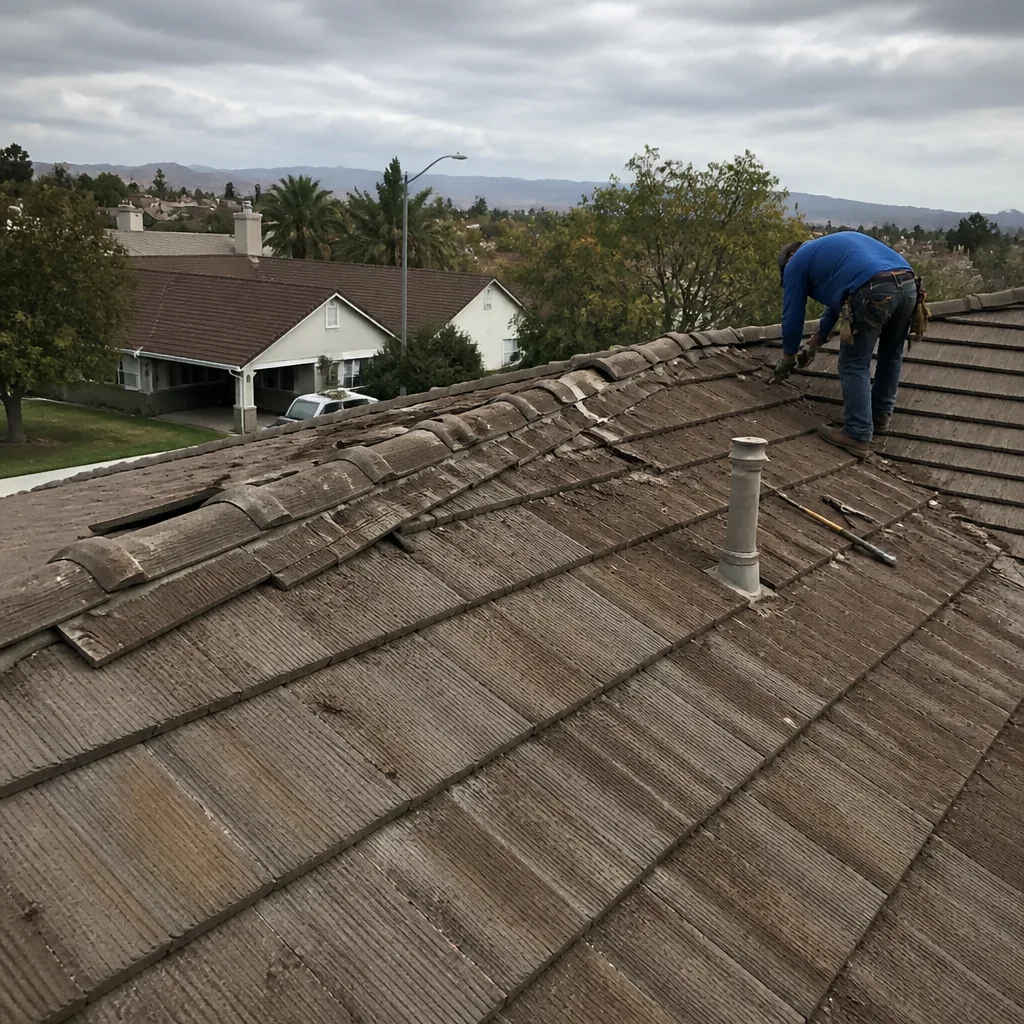 Before
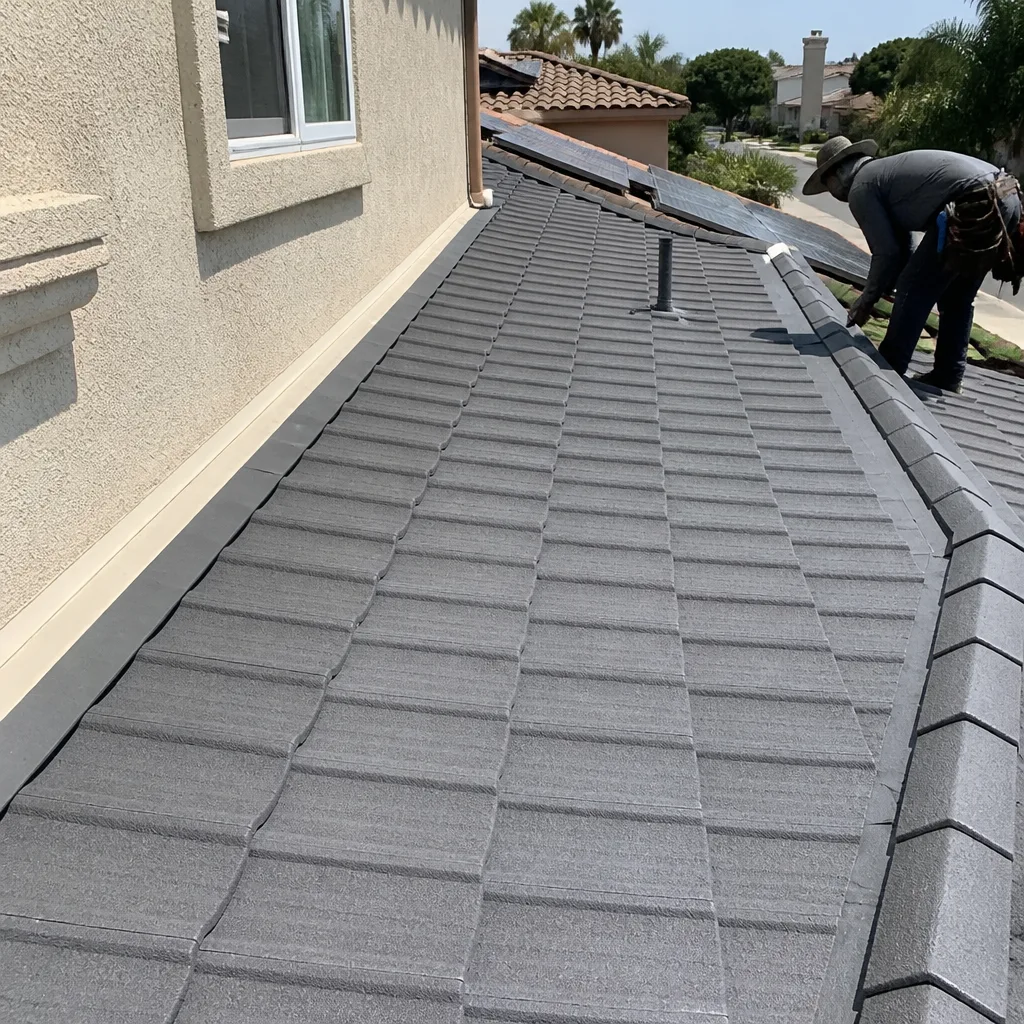 After
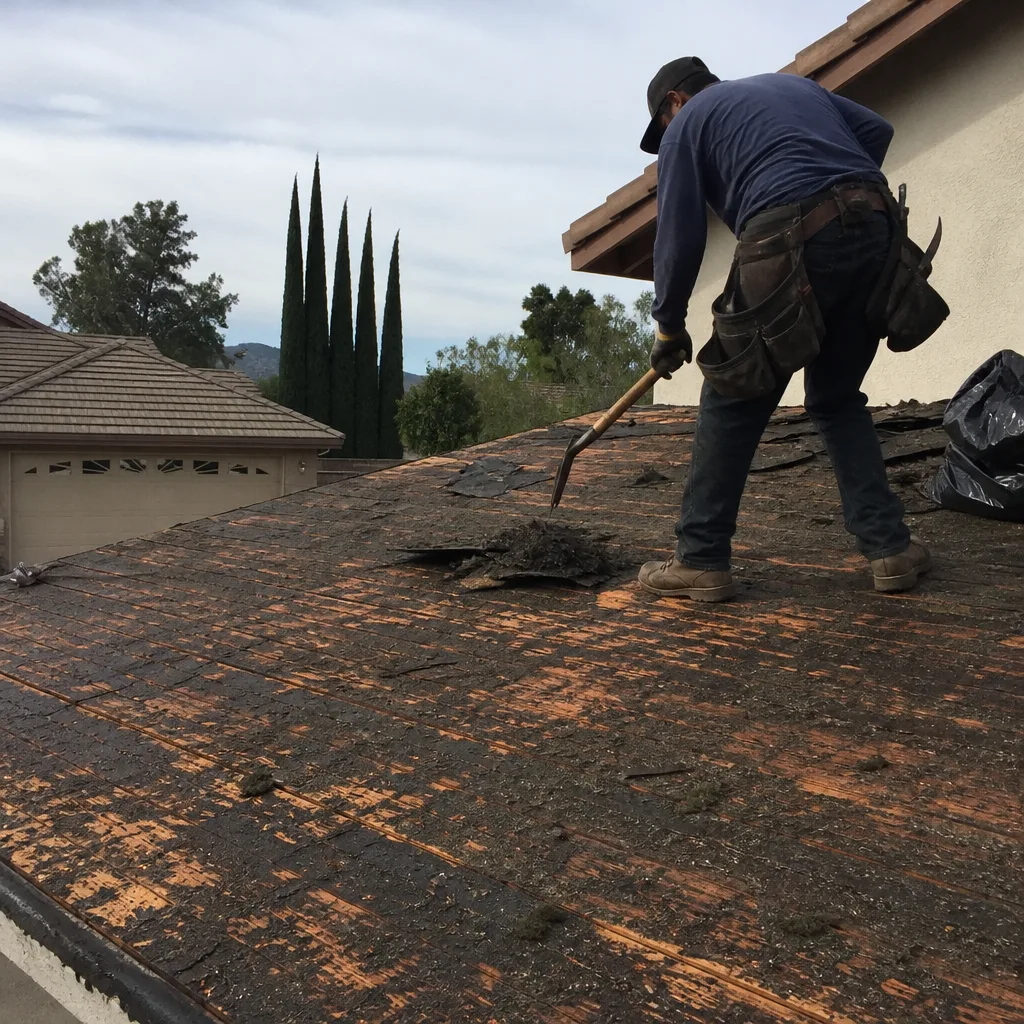 Before
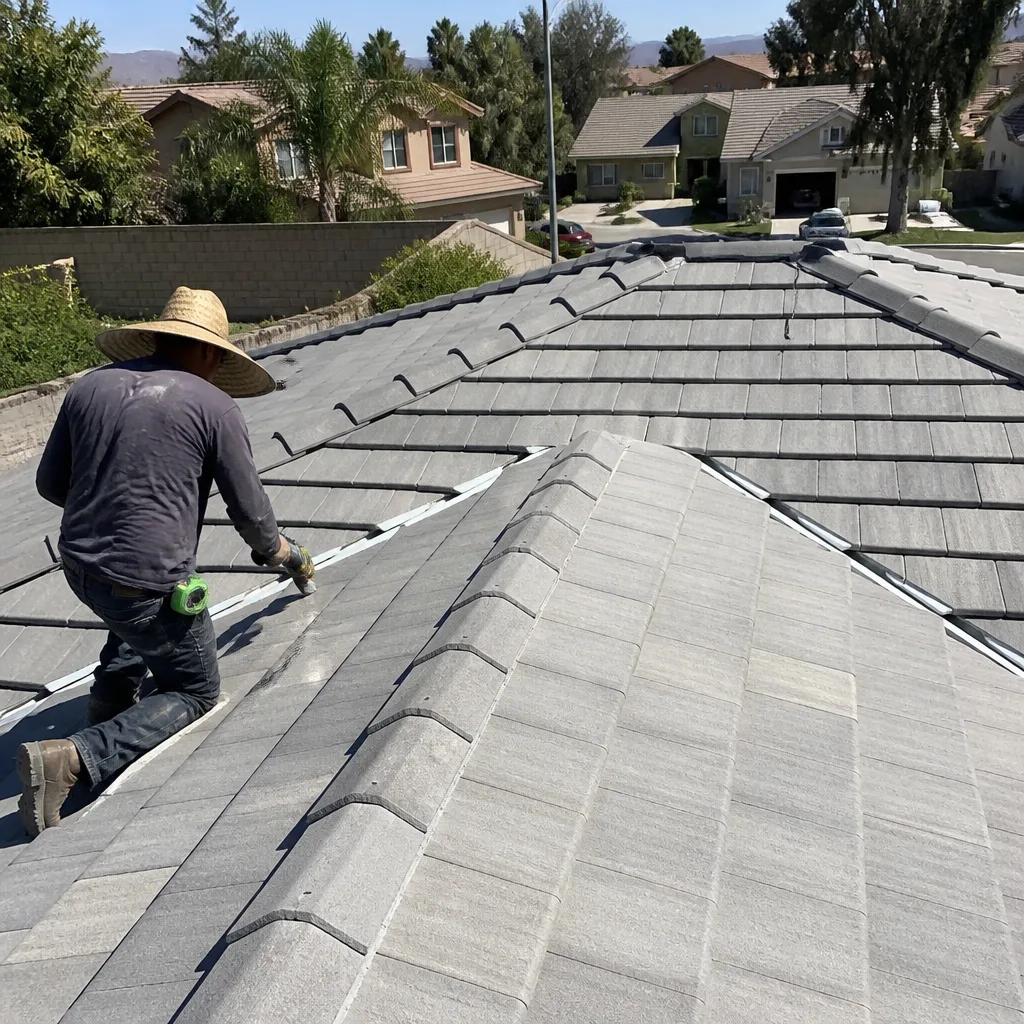 After
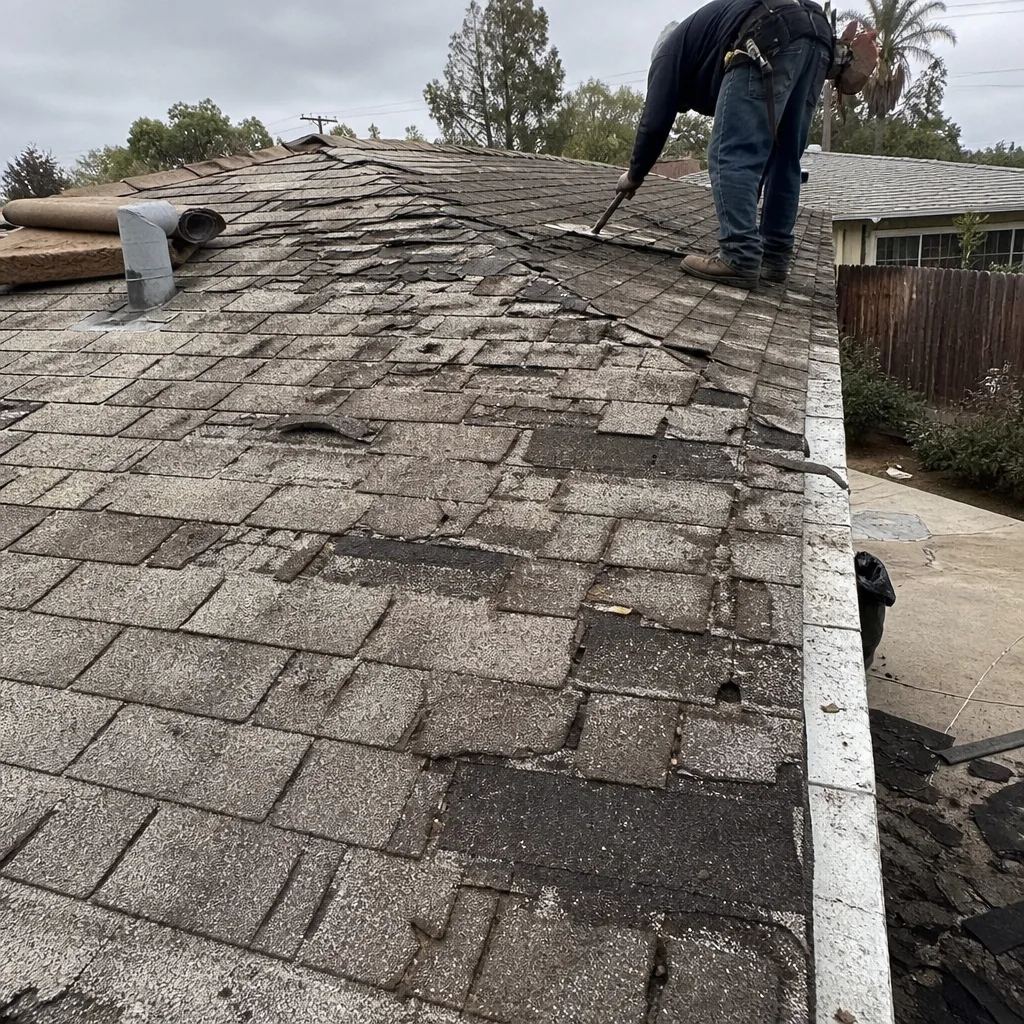 Before
 After