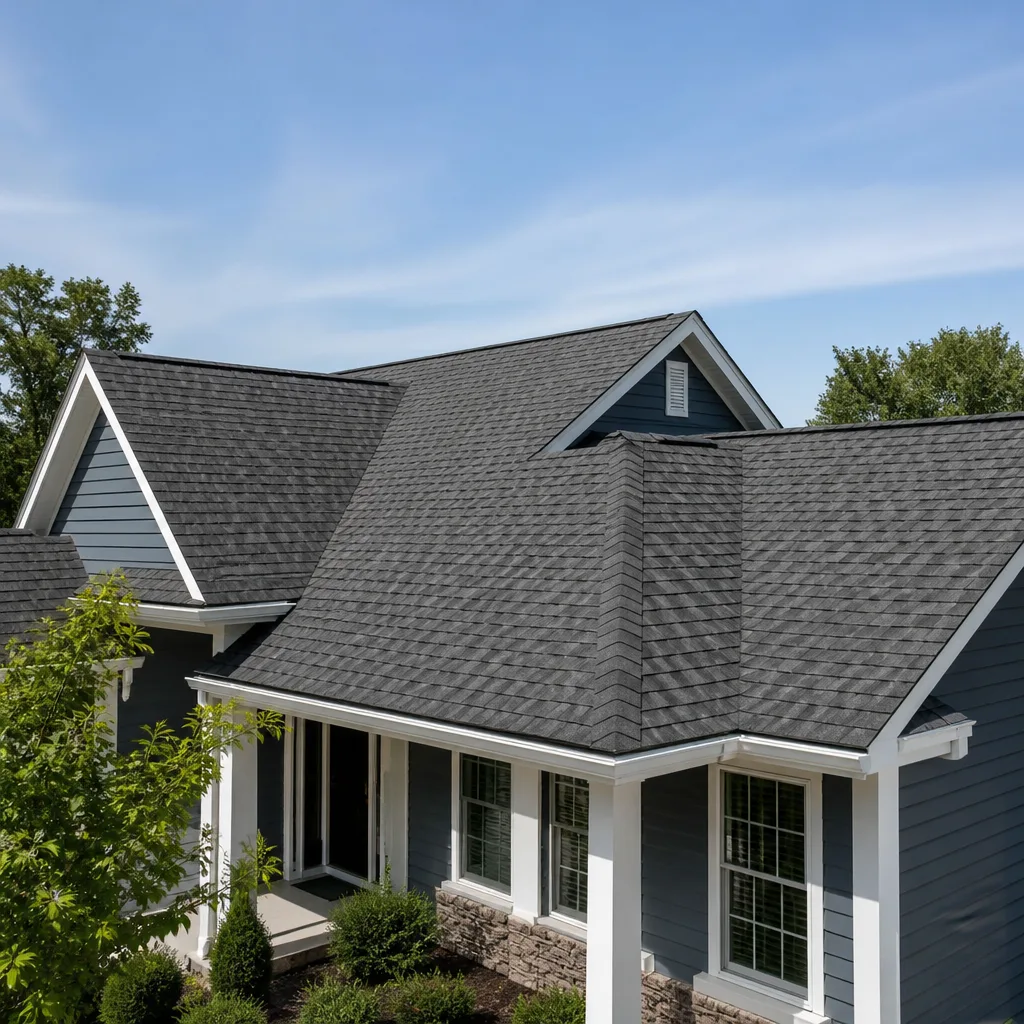
 Architectural shingles
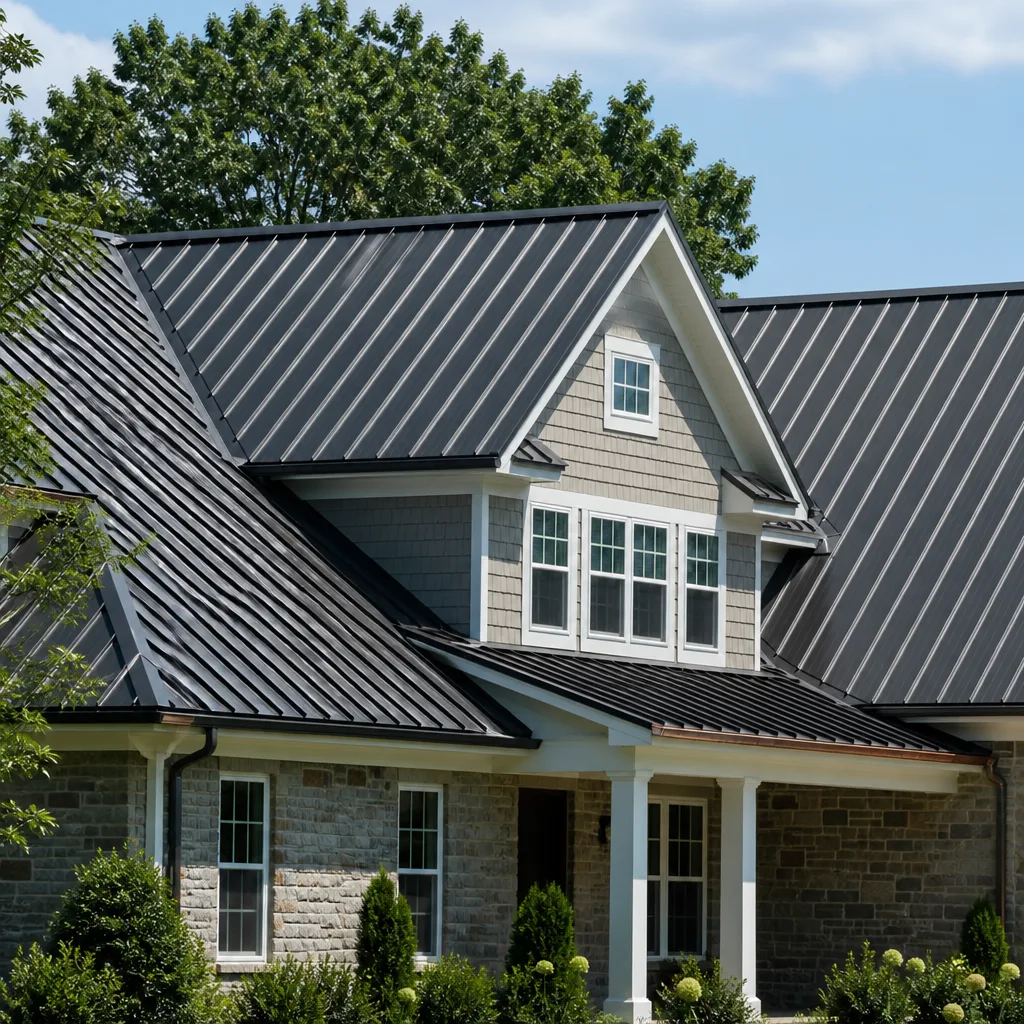 Metal roofing
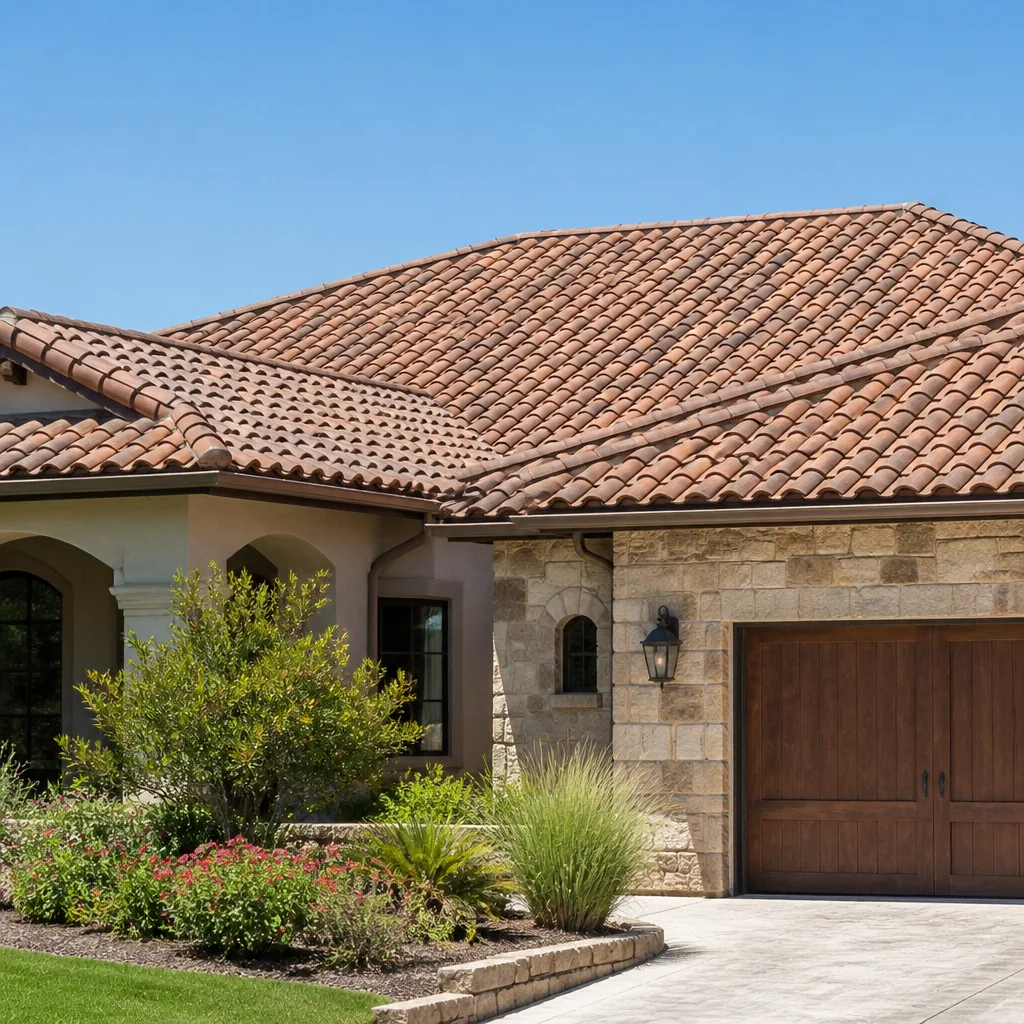 Tile roofing
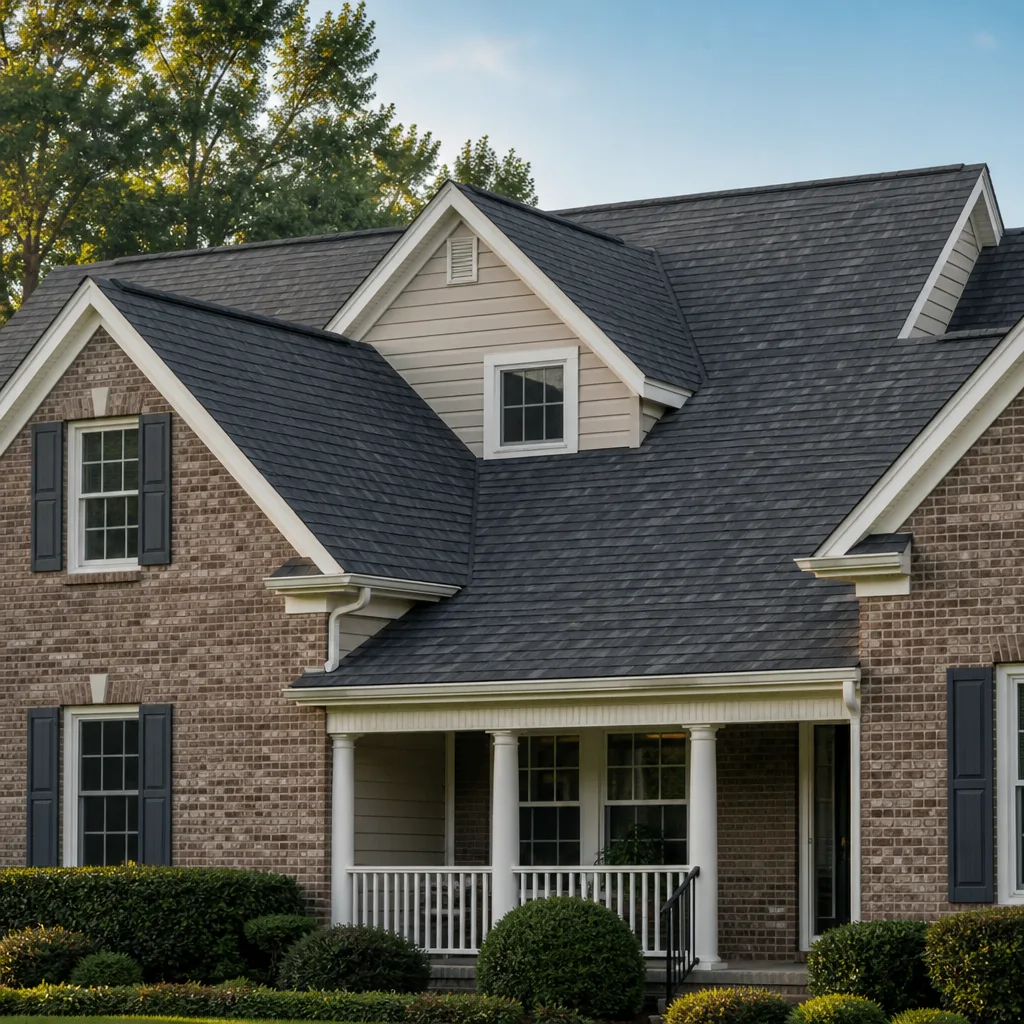 GAF
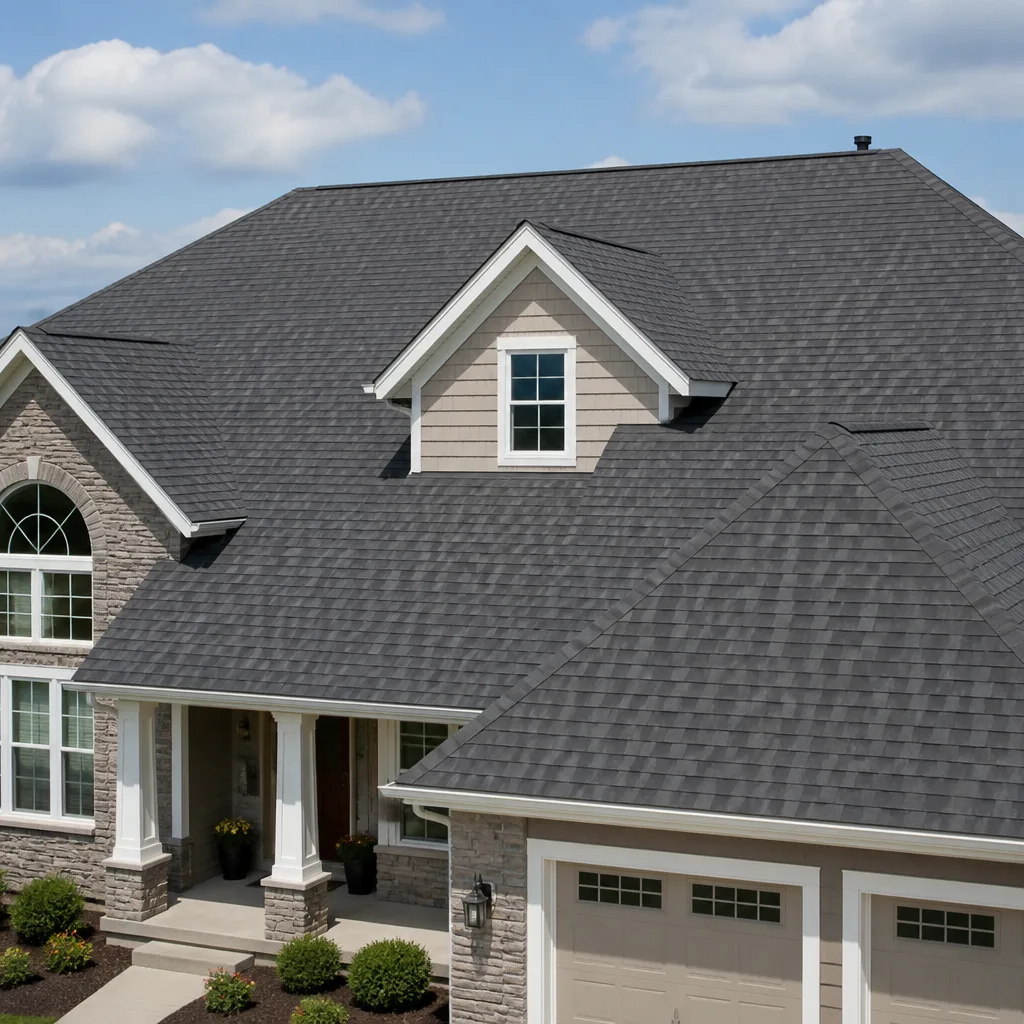 Owens Corning
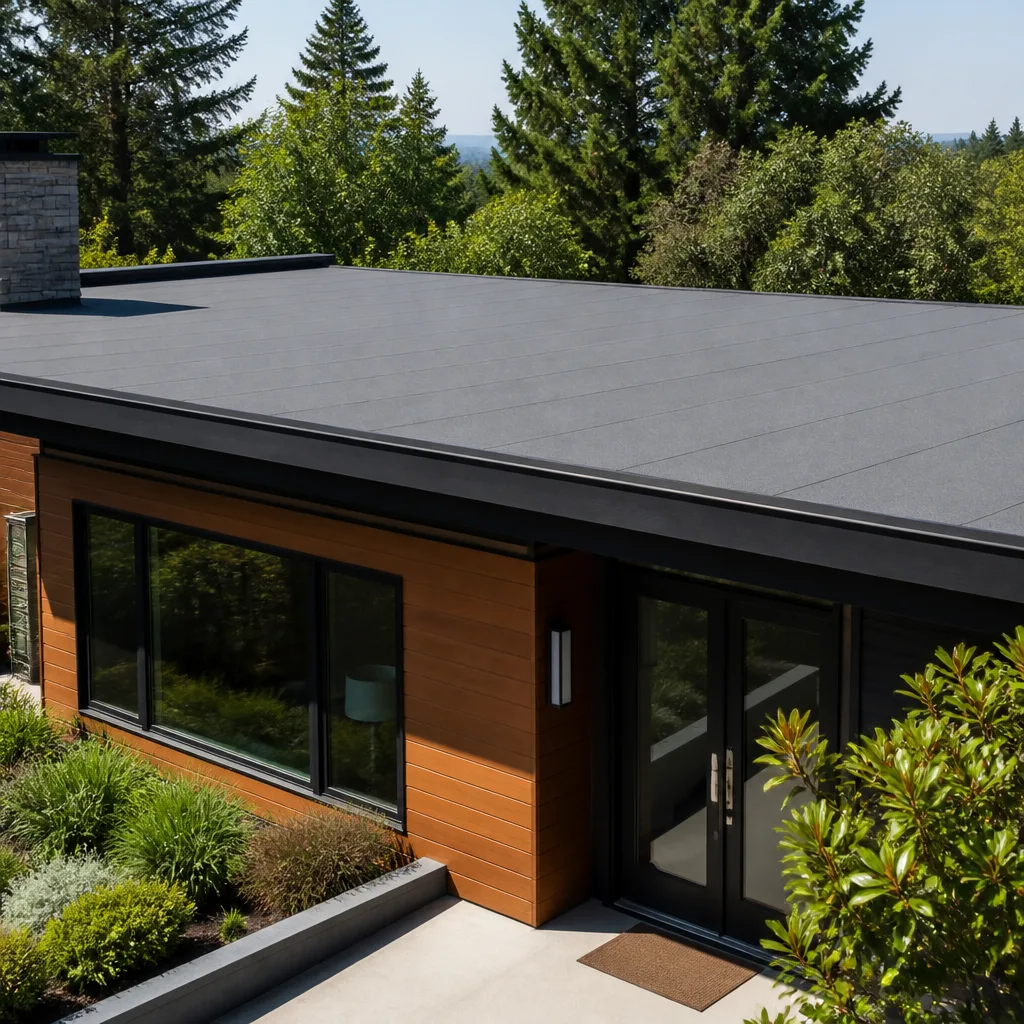 Flat & low-slope
Free roof inspection with deck photos before we talk money - GAF and Owens Corning certified installation
Fast, Reliable Roof Replacement Across Running Springs
Roof replacement in Running Springs usually runs $14,000 to $28,000 for a typical mountain home, with the final number driven by pitch, snow load engineering, and whether you’re pulling off original wood shakes or a single layer of asphalt. We work up here regularly, and our crews understand what a 6,000-foot elevation does to a roof that a low-desert contractor never sees. If you’re weighing a replacement before the next snow season or after a leak finally showed itself, call (866) 217-3967. We’ll schedule a straight assessment, walk the roof with you, and give you a written line-item quote.
Why Moreno Valley Roof Repair Is Running Springs’s Preferred Roof Replacement Company
Ruben Ibarra built our company around a simple idea: you should be able to choose from the best materials without being locked into one manufacturer’s program. That matters up here because Running Springs roofs face real snow load, and the right shingle for your cabin is not the same as the right shingle for a flat lot in San Bernardino. We work with GAF, CertainTeed, Owens Corning, IKO, Atlas, Tamko, and Boral, so when we recommend a material, it’s because we think it fits your roof, not because we’re obligated to push one brand.
We’re known for honest scope-matching. Repair when repair makes sense, replace when it doesn’t. That’s how we’ve earned our reputation among Running Springs homeowners, many of whom call us after another contractor gave them a replacement quote without even pulling a shingle back. We’ll inspect first. You get a written assessment and our recommendation, and you decide. If the roof needs replacement, we handle it from tear-off to final inspection with one point of contact: the same person who walked your roof is the person who answers your calls.
Styles & brands we work with
Asphalt Shingle Roof Replacement in Running Springs
Asphalt shingle roof replacement in Running Springs is the most common job we do up here, typically running $14,000 to $24,000 on a standard mountain home, depending on pitch, decking repairs, and whether we’re pulling one layer or two. Most of the cabins and chalets we replace were built with wood shakes, and by now the shakes are cracked, cupped, or patched with whatever was handy. An asphalt shingle replacement gives you a Class A fire-rated surface, which matters more in Running Springs than almost anywhere else in the Inland Empire. Our Roof Replacement crews handle steep pitches, mountain access, and freeze-thaw details as a matter of routine.
Architectural vs. Three-Tab
We install far more architectural shingles than three-tab in Running Springs, for two reasons. Architectural shingles carry higher wind ratings, which matters during Santa Ana events that funnel through the passes and hit these ridges. They also give the roof that dimensional, cedar-like shadow line that suits a mountain cabin better than flat, old-school strip shingles.
Ice and Water Shield Is Non-Negotiable Here
At this elevation, code requires ice and water shield in the valleys, eaves, and around penetrations. We go further and run it through the entire north-facing slope on most jobs, because we’ve seen what ice dams do to the lower three feet of a roof when that shield is skimped. It costs a bit more and it stops leaks that roofers down the hill never think about.
New Roof Installation in Running Springs
New roof installation in Running Springs applies mostly to additions, new cabins, and deck-over projects where the existing framing stays but the entire roof assembly is rebuilt from sheathing up. A new installation here typically runs $18,000 to $28,000 depending on square footage, engineered snow load, and the finish material. Some of the newer construction going up around the north side of the mountain is being built as full-time homes after years of weekend-cabin use, and those projects demand a different level of sheathing and underlayment than a standard Southern California roof.
New Construction Roofing
When we install a roof on new construction in Running Springs, we coordinate with the framing and window schedule early, because the roof here is part of the fire-safe assembly, not just the lid on the house. That means fire-rated decking where required, full underlayment runs that extend beyond the eave, and stainless fasteners specified into the fascia and drip edge. The mountain building culture is wildfire-conscious, and the roofing decisions you make at the rough stage affect what the insurance inspector will approve at final.
Roof Decking Replacement
Most older cabins in Running Springs have dimensional lumber decking in decent shape, but the north valleys and areas around chimneys and plumbing vents are often soft or delaminated. A decking repair on this mountain usually runs $2 to $5 per square foot of damaged area when we’re already in the roof. We quote it as a line item, and we photograph every soft sheet or board before we cut it out, so you see exactly what you’re paying for.
Trusted Brands We Service in Running Springs
We install and supply materials from GAF, CertainTeed, Owens Corning, IKO, Atlas, Tamko, and Boral, and we keep standard architectural shingle stock in the truck for mountain jobs. For Running Springs customers, that means when we open a roof and find a valley that needs more material than the original quote anticipated, we can usually pull from our own stock rather than waiting on a supply run. In practice, we recommend GAF and CertainTeed most often for mountain homes because their architectural lines handle snow load and wind exposure well, but we’ll also show you Atlas and Tamko options if budget is the dominant factor. The material decision should be yours, informed, and matched to your roof’s actual exposure.
See the difference
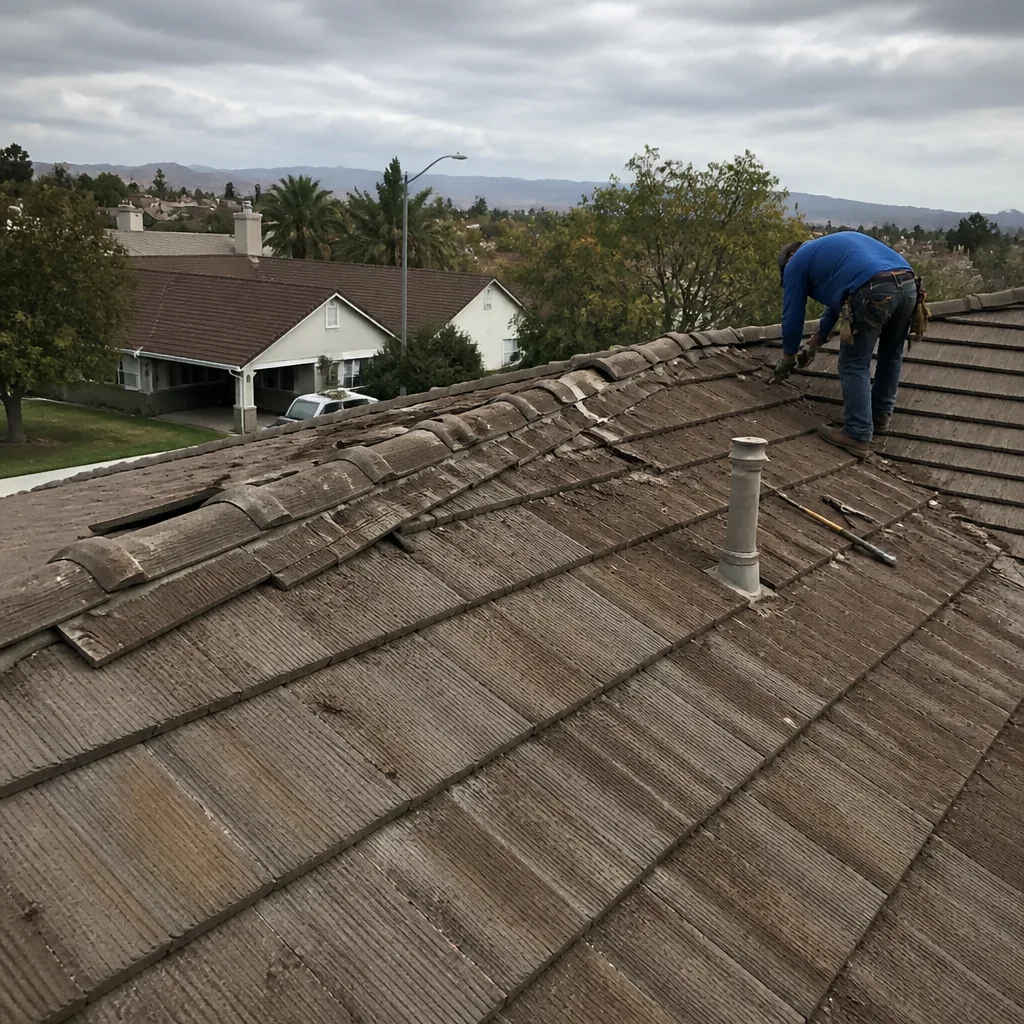 Before
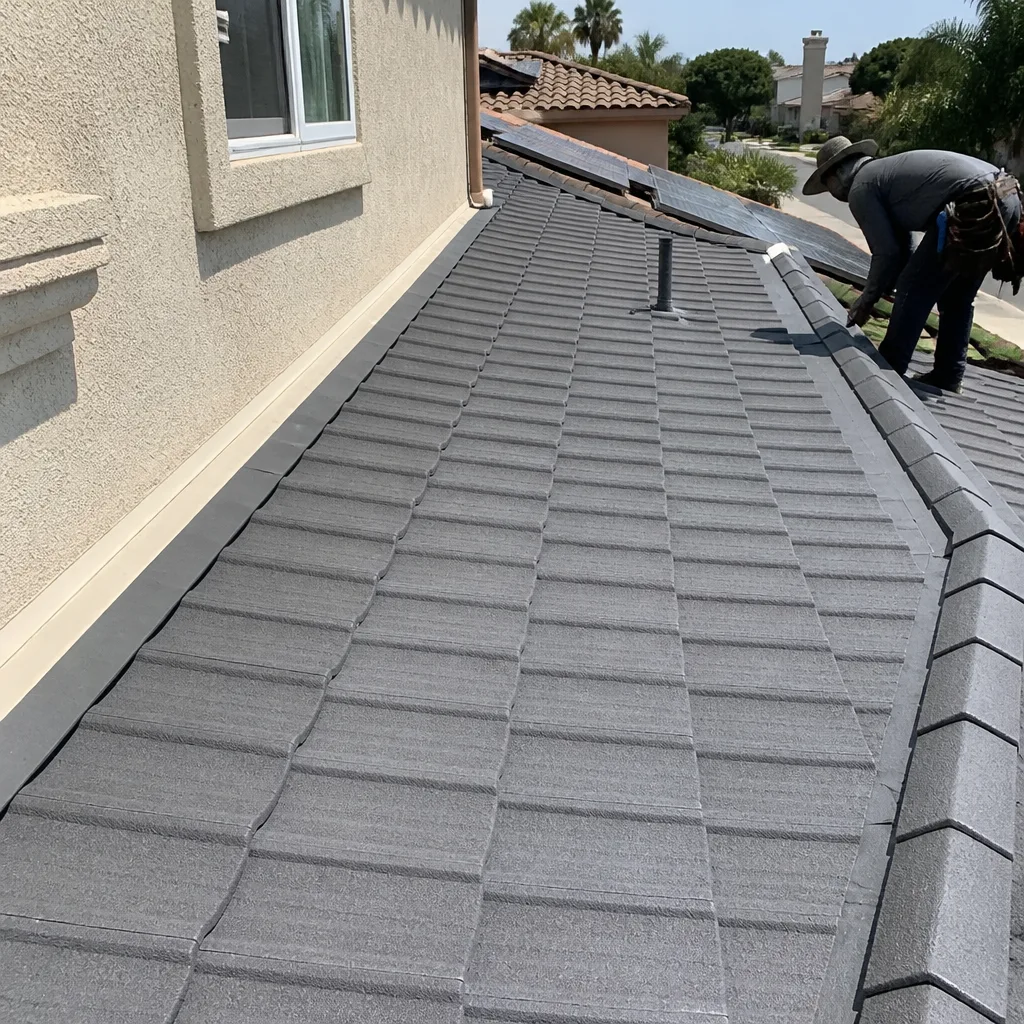 After
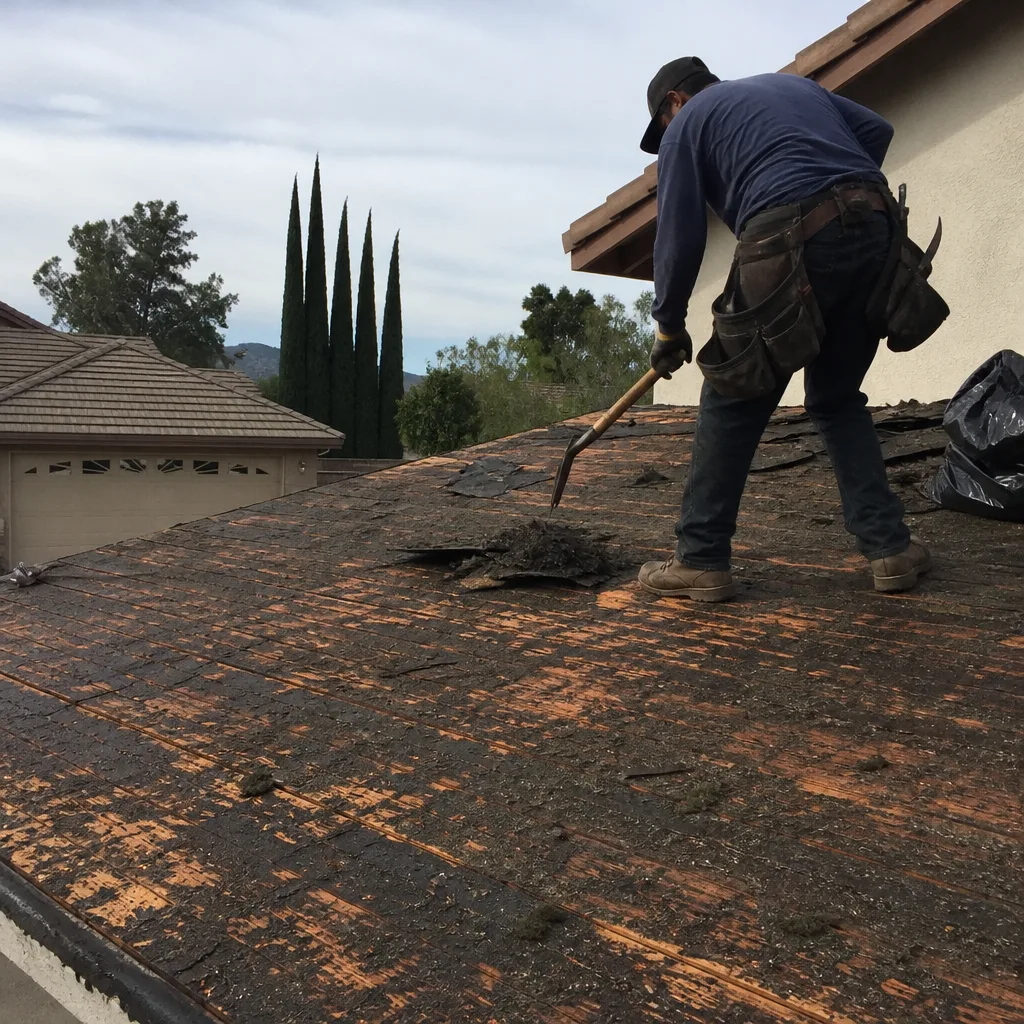 Before
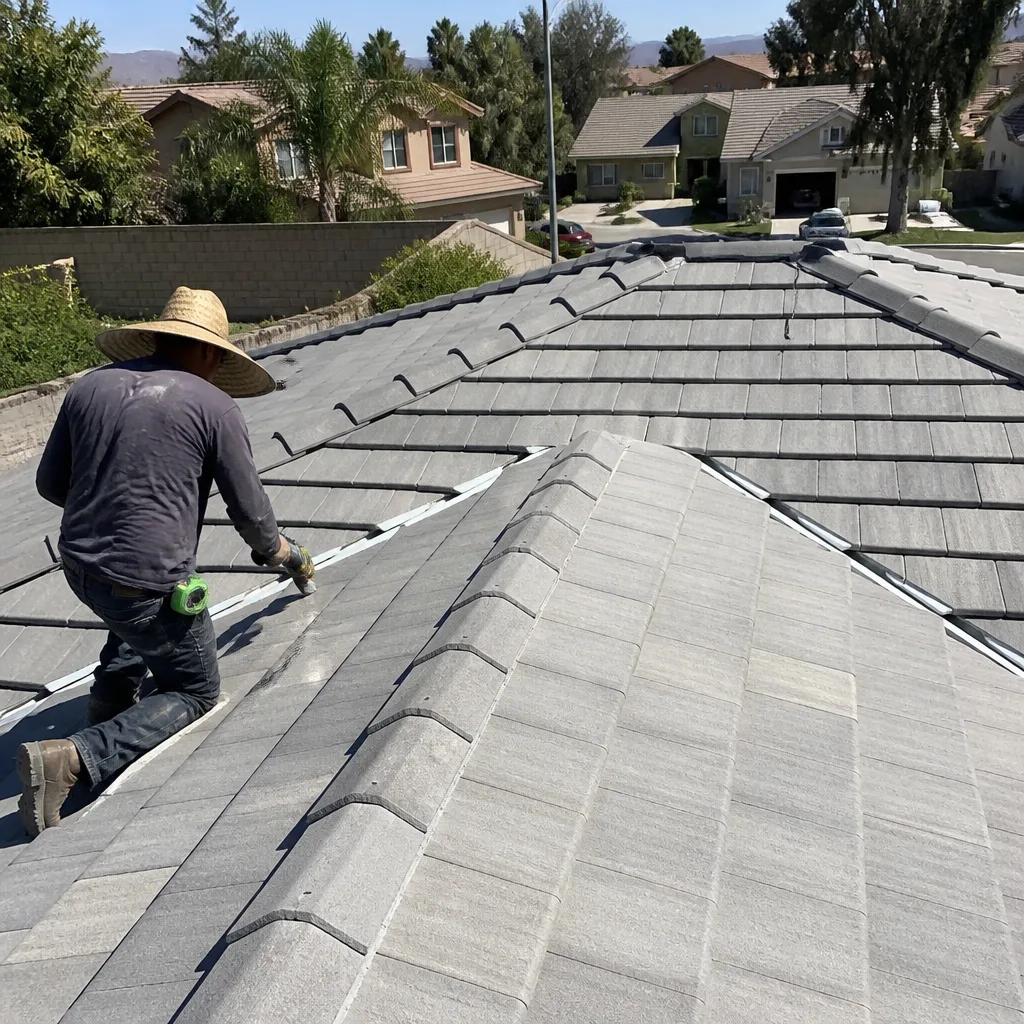 After
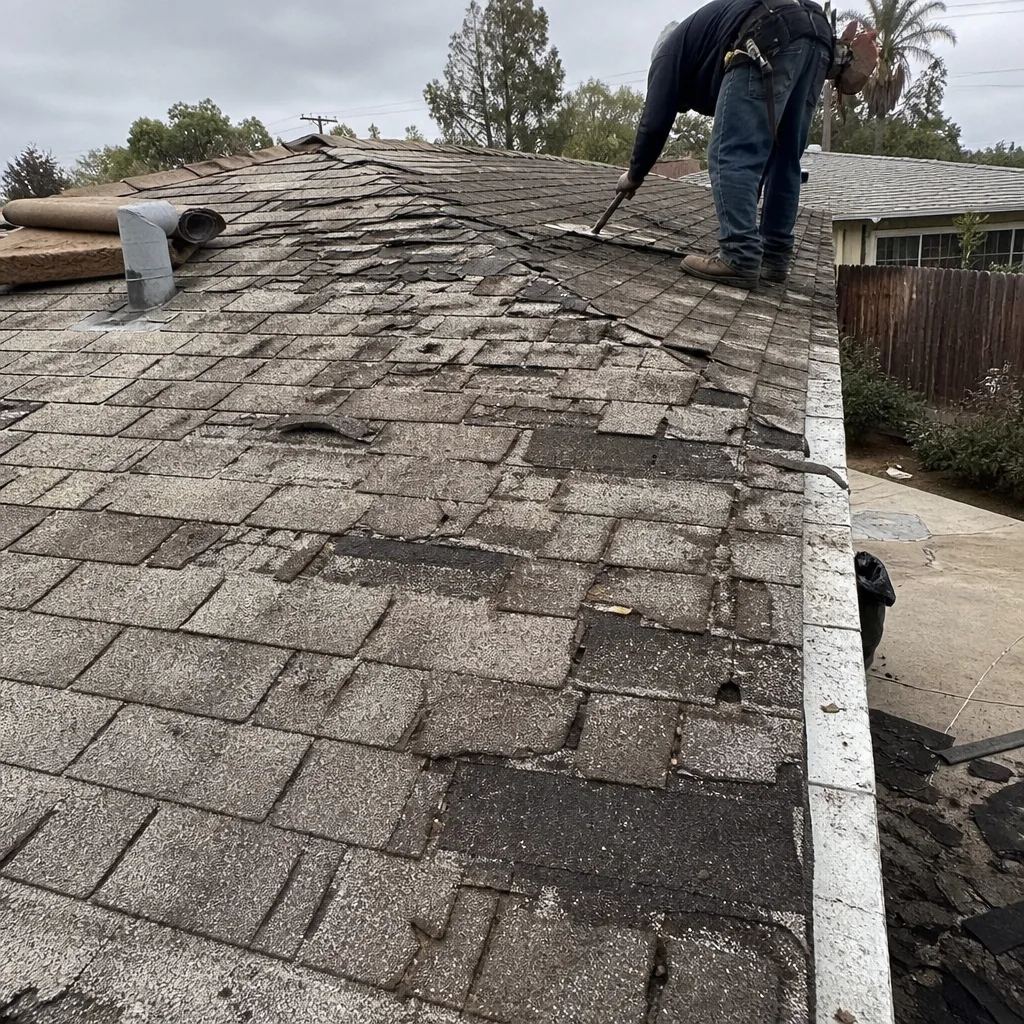 Before
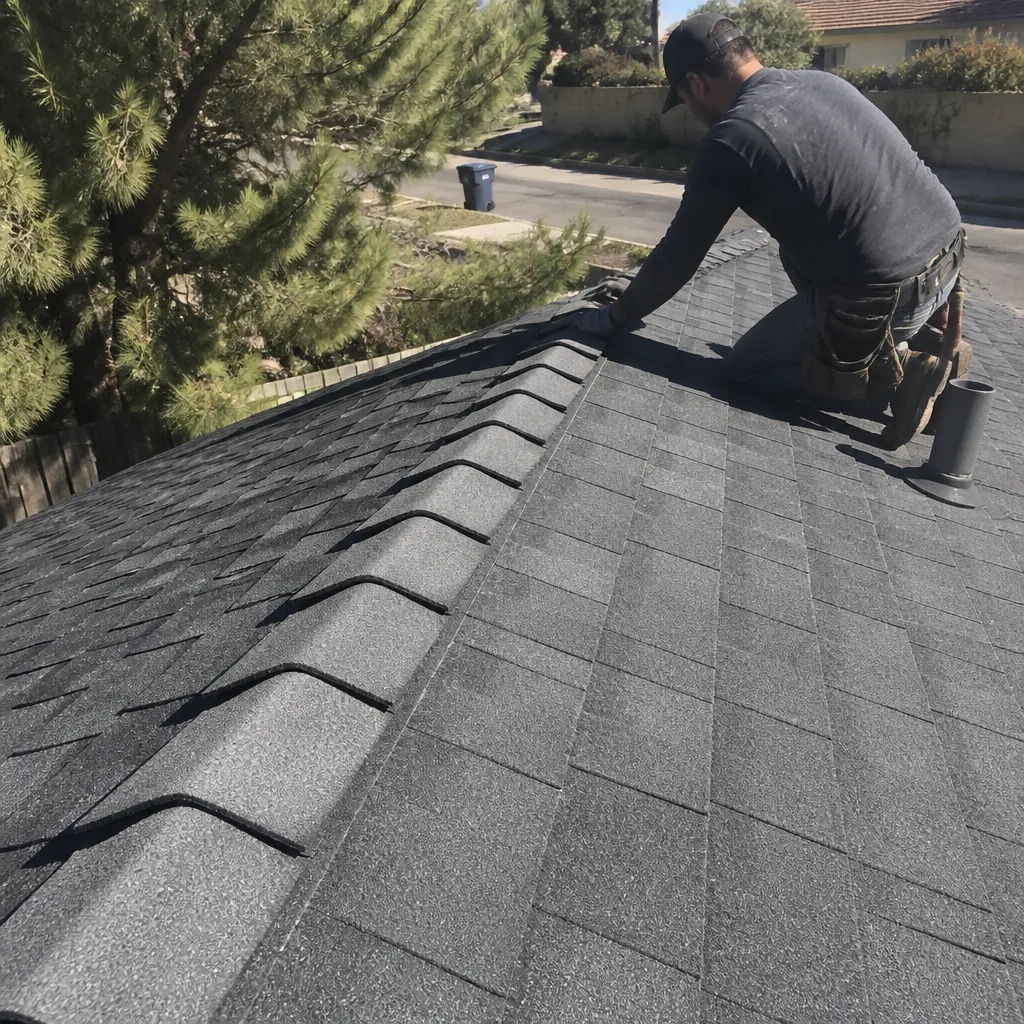 After
Common Roof Replacement Problems We See in Running Springs Homes
- Ice dams on north-facing slopes. Snow accumulates on the shaded side of the roof, melts at the ridge, and refreezes at the cold eave, backing meltwater up under the shingles and underlayment. This rots decking and fascia before any interior stain shows.
- Dried-out original wood shakes. At 6,000 feet, UV is intense, and shake roofs crack and splinter within 20 to 30 years. Once water gets past the felt and into the valleys, you’re looking at decking repair, not just a re-roof.
- Short-run underlayment and reused flashing. Some previous repairs up here skimped on ice and water shield at the eaves and reused old drip edge and flashing. Freeze-thaw works those joints loose within a few winters, and leaks return at the exact spots that were “fixed.”
- Santa Ana wind lift at the ridges. Wind events rip through the passes and hit these slopes with gusts that lift shingle tabs and tear off ridge cap. A proper wind-rated installation with factory starter strips and six-nail patterns is the difference, and it’s rarely more than a few hundred dollars in labor.
On a steep-pitch mid-century chalet up in the Running Springs mountain cabins, our crew tore off two layers of dried-out original wood shakes and found soft decking at the north valleys where winter ice dams had been backing water up under the old underlayment for years. We re-decked the soft runs, laid a full ice and water shield through the valleys and eaves, and set a Class A architectural shingle with a factory starter strip, new drip edge, and stainless fasteners into the existing fascia. The homeowner’s insurance inspector signed off on the fire-rated assembly, and the north slope stopped leaking the next snow season.
Pricing for Roof Replacement in Running Springs, CA
A typical asphalt shingle re-roof in Running Springs runs $14,000 to $24,000. A new construction roof or full replacement with extensive decking repair lands between $18,000 and $28,000. The biggest cost factors up here are roof pitch (steep-pitch work slows us down and requires staging), the condition of the decking beneath the old roof, and whether your home needs snow-load upgrades to meet current code. Higher-end material selections like premium CertainTeed or GAF lines with upgraded underlayment add $2,000 to $5,000 on a typical roof. The quote we give you is a fixed, line-item price. No change orders unless we open the roof and find rot that wasn’t visible from the surface, and we’ll show you photos before we do anything. Call (866) 217-3967 for a free estimate.
We Also Serve Cities Near Running Springs
Moreno Valley Roof Repair works throughout the San Bernardino mountain communities. If you’re in Lake Arrowhead, Highland, Mentone, or Crestline, we bring the same mountain-correct roofing approach we use in Running Springs. Call (866) 217-3967 and tell us where you are. We’ll schedule an assessment, explain what we find, and quote it straight.
Serving Running Springs, CA — Our Local Coverage Area
We’re based in the Running Springs area and know this community well. Use the map below to see our service coverage — if you’re nearby, we can almost certainly help.
FAQs About Roof Replacement in Running Springs
A Running Springs roof replacement costs more because the assembly has to survive snow load, freeze-thaw cycles, and ice dams that flatland roofs never face. Ice and water shield through the valleys and eaves, steeper-pitch labor, decking reinforcement for snow loading, and stainless fasteners all add cost. On average, expect to pay 20% to 35% more per square than the same square footage in the low desert. The extra money buys a roof that lasts up here, not just a shingle job. Call (866) 217-3967 for an exact quote on your home.
In most cases, no. Mountain shake roofs are usually too uneven and too thin at the gaps to serve as a nailable base for asphalt shingles, and layering traps moisture between the two systems. Running Springs building code generally requires stripping shakes down to the decking, repairing soft spots, and starting clean with new underlayment and a Class A assembly. You’ll get a better roof and fewer future problems, and we’ll quote the tear-off as part of the job. Estimates are free.
The wind rating on architectural shingles comes from how the shingle is manufactured, nailed, and sealed. We install six nails per shingle on high-exposure slopes in Running Springs, set a factory starter strip at the eaves, and use the manufacturer’s specified adhesive pattern. That combination is what lets a roof survive 110 to 130 mph gusts during Santa Ana events. Skip the starter strip or cut the nail count, and wind gets under the tabs and peels the roof. Ask your bidder to spec the nail pattern in writing. Call us at (866) 217-3967 and we’ll show you the difference on your roof.
Compare the assembly line items, not just the bottom line. Look for ice and water shield coverage through valleys and eaves, the number of nails per shingle, whether the bid includes decking replacement and to what extent, and whether the shingle is Class A fire-rated. In Running Springs, a bid that omits ice and water shield or specs a three-nail pattern is not the same roof as one that includes those items. We provide line-item bids that call out every component, so you can compare apples to apples. Call (866) 217-3967 for a written estimate.
Most Running Springs homeowners need a Class A fire-rated roof assembly to satisfy insurance requirements, especially in the wildland-urban interface where the fire-safe council and your carrier have specific standards. Asphalt architectural shingles with a Class A rating meet that bar in most cases, while original wood shakes generally do not. We handle the paperwork and photos that insurance inspectors request after a replacement. Call (866) 217-3967 and we’ll walk you through what your carrier is likely to require for your specific lot.
Written by Ruben Ibarra, Owner at Moreno Valley Roof Repair, serving Running Springs and the San Bernardino mountain communities.