Boral Roof Repair in Moreno Valley: A Homeowner’s Guide
Boral roof repair in Moreno Valley usually comes down to one thing: matching the existing tile profile and installing it with the right setting method. A mismatched tile doesn’t just look off. It can channel water sideways into the underlayment and turn a $300 repair into a $3,000 re-roof. Here’s what a correct Boral repair actually requires, and when a “close enough” tile isn’t close enough. If you’d rather skip the homework, call (866) 217-3967 and we’ll take a look.
We pulled a Boral Madrid tile off a home in the Sunnymead Ranch area last month where the previous repair used a generic flat concrete tile from a supply yard in San Bernardino. The homeowner had paid for a repair two years earlier. The replacement tile sat flatter than the original, which meant water pooled at one corner instead of shedding down the interlock. The underlayment beneath that spot had started to rot. The repair itself had created the leak. That’s the thing about tile roofs in Moreno Valley. Heat, rain, and time expose sloppy work fast.
What Makes a Boral Roof Different in Moreno Valley
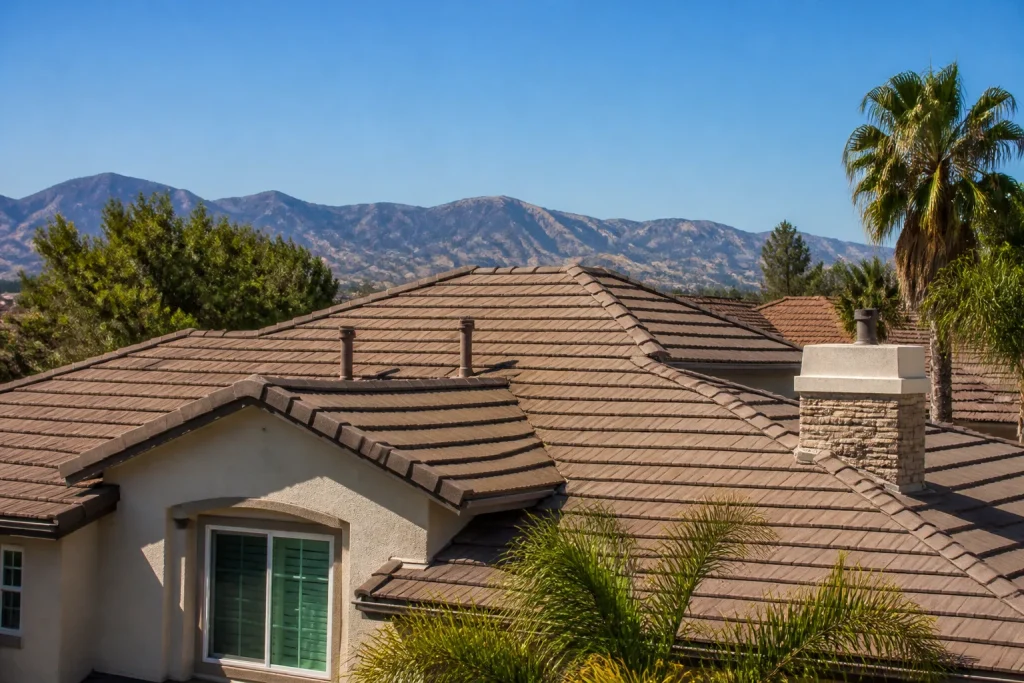
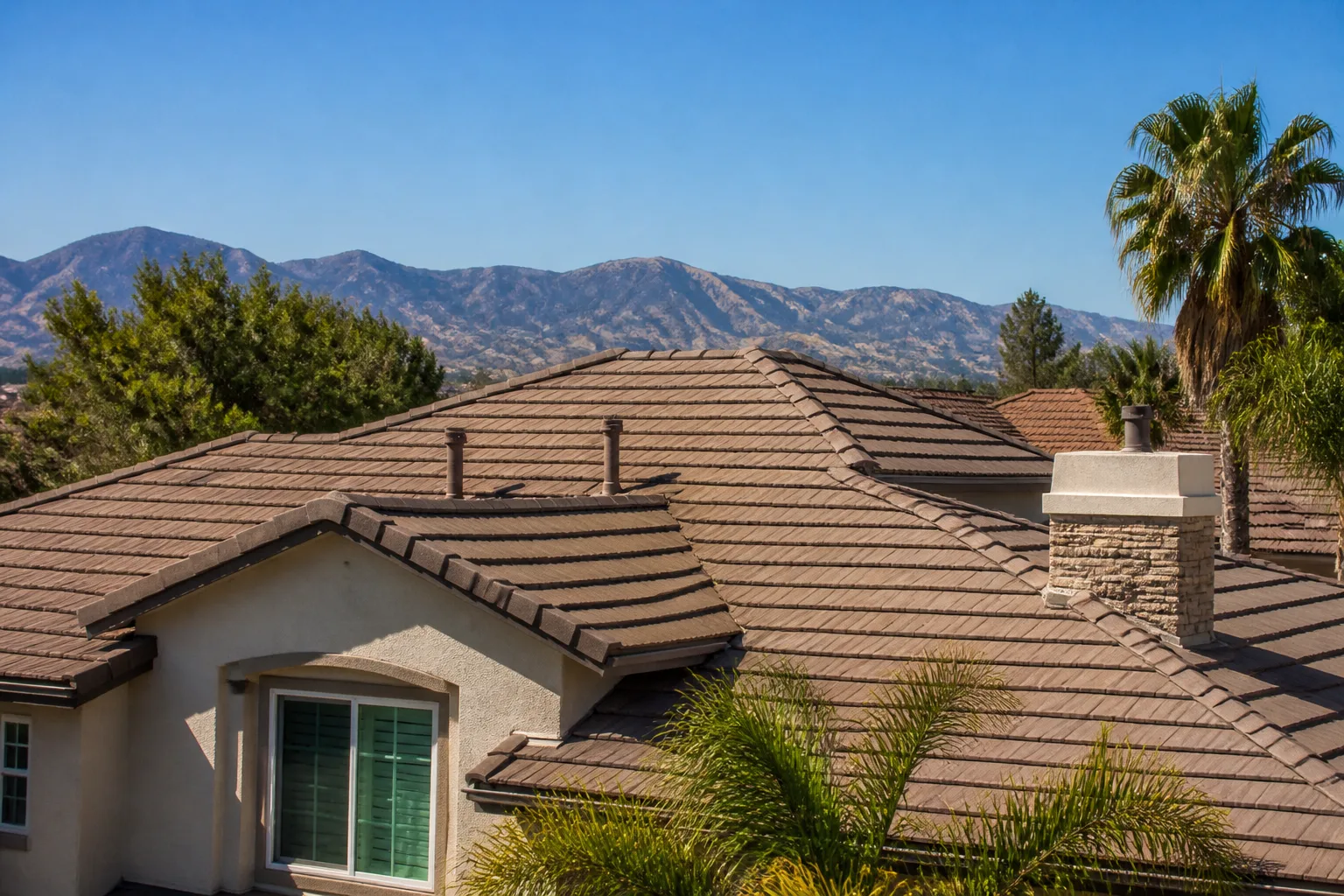
Boral doesn’t make one tile. They make several distinct concrete and terracotta profiles, and each one interlocks differently. In Moreno Valley, the most common Boral profiles we see on tract homes built from the late 1980s forward are Saxony, Madrid, and Barcelona. There are others. Mission-style curved barrels show up on custom homes in the Box Springs foothills. The point is, “Boral tile” is not a single product. It’s a family of profiles, and each one has its own dimensions, weight, water channel pattern, and color system.
That matters because a tile roof is a water-shedding system, not a waterproof membrane. The tiles overlap and interlock so rain runs down the channels to the gutters. If a replacement tile doesn’t match the profile, it breaks that system. Water takes the path of least resistance. A flatter tile, a narrower flute, a different headlap. Any of those can redirect water sideways instead of down. You won’t see it from the ground. You’ll find out in a heavy rain event, or when the ceiling stain appears.
We work with Boral materials directly, alongside GAF, CertainTeed, and Tamko products, so we match what’s already on your roof instead of handing you whatever tile is sitting in the yard.
- Profile match: Saxony interlock must be replaced with Saxony, not a generic flat tile.
- Color lot differences: Boral tiles weather over time. Even a correct profile needs color matching against the existing roof, not a catalog swatch.
- Weight compatibility: Boral concrete tiles are heavy. A repair must account for what the deck and battens were built to carry.
The Two-Layer Reality: Tile and Underlayment
Most homeowners think of a tile roof as one thing. It’s actually two systems working together. The visible layer is the tile. The hidden layer is the underlayment, which sits between the tile and the roof deck. The tile sheds water. The underlayment catches what gets through and channels it off the roof. In Moreno Valley, that underlayment also takes a beating from UV exposure around tile edges and from thermal cycling. When it fails, you get leaks that no tile replacement will stop.
This is why we treat Boral tile damage as a two-part question. First: what happened to the tile? Second: what happened beneath it? A single cracked field tile might be caused by a falling branch, a foot misstep, or impact from wind-blown debris. That’s a one-tile fix, assuming the underlayment is intact. But if you’re seeing cracked tiles repeatedly in one area, the issue is probably not tile. It’s the deck shifting, battens rotting, or underlayment that has lost its ability to move water.
A proper Boral repair starts with removing the damaged tile and looking at what’s under it. If the underlayment is compromised, replacing tile alone is wasted money. The water has already found a path. This is where our Roof Inspection in Moreno Valley service matters. We assess before we recommend, and you don’t owe us a dime for repairs if the inspection shows you’re fine.
Documenting Your Boral Installation Before You Call
Here’s a move that saves time and money. Before you call any roofing contractor in Moreno Valley about a Boral repair, gather what you can about your existing installation. You don’t need to climb on the roof. Most of this is accessible from the ground or from your paperwork.
- Check your purchase or lot documents: Builder specs often list the roof material by brand and line. Look for Boral, Saxony, Madrid, Barcelona, or another profile name.
- Photo document from multiple angles: Take clear shots of the tile surface, the edge profile, and any broken pieces. A tile that’s already broken gives you a cross-section view of its shape.
- Look for batch codes: The undersides of some Boral tiles carry manufacturing stamps with batch information. A tile already on the ground can tell you a lot.
- Note the color name: Boral color designations change over time. What was called “Terracotta Red” in 1995 might not be the same specification today. A photo in direct light helps.
This documentation matters because it forces a productive conversation with whichever roofer you call. Instead of “I think it’s a red tile roof,” you can say “Saxony profile, Barcelona Red, original install from 2003.” That’s the difference between a guess and a spec.
We also see homeowners benefit from knowing whether their roof was mortar-set or foam-set, which we cover next, because it changes how the repair gets done and how well it stays put in Moreno Valley heat.
Mortar-Set vs. Foam-Set: Why the Repair Method Must Match
Concrete and terracotta tiles get attached to a roof two ways. Traditional mortar-set installation uses cement mortar to bed the tiles, especially at hips, ridges, and eaves. Foam-set installation uses polyurethane foam adhesive applied in specific patterns to hold tiles to the deck. Both work. But they are not interchangeable on a repair.
Here’s why this matters in Moreno Valley specifically. Our summer rooftop temperatures routinely exceed 140 degrees. Mortar expands and contracts at a different rate than concrete tile and a different rate than foam adhesive. If the original roof was mortar-set and someone patches a missing tile with foam, the new tile will move independently of its neighbors as temperatures cycle. Over time, that movement loosens the bond and the next wind event takes the tile off.
Conversely, if the roof was foam-set and someone mortars in a replacement, the rigid mortar bond can crack under thermal stress and leave a void for water. We’ve seen both failures. The correct repair always matches the original setting system, which is why documenting your existing installation before calling is worth the twenty minutes it takes.
When we handle a Boral repair, we identify the original setting method during the inspection and use the same system for the fix. If the original system is the reason the roof is failing, that’s a different conversation. Honest repair sometimes means admitting that the repair method itself is the problem, not the tile.
One-Tile Fix or Sign of Something Worse?
Cracked tiles fall into two categories. The first is isolated damage. A branch came down in a windstorm. A delivery person walked where they shouldn’t have. A tile cracked along its weakest point from impact. In those cases, if the underlayment is intact and the surrounding tiles are sound, a single-tile replacement is a legitimate repair. You’re done.
The second category is the one that needs attention. Repeated cracks in the same section. Tiles sliding out of position. Visible gaps at the headlap. Dark staining on the tile edges where water has been sitting. These are not individual tile failures. They’re symptoms of a structure or underlayment problem, and you need to know which before you spend money on the visible layer.
Common culprits we find across Moreno Valley include:
- Batten rot: Wood battens that hold tiles in place degrade over decades. Once they go soft, tiles shift and crack.
- Deck movement: Shifting or settled decking changes the geometry of the tile field. Tiles bind against each other and break.
- Underlayment failure: When the layer beneath the tile degrades, water pools where it shouldn’t, and freeze-thaw cycles crack tiles from underneath.
- Fastener corrosion: Nails and screws holding battens and tiles corrode over time. A corroded fastener fails suddenly, and the tile it holds moves.
If you’re seeing three or more cracked tiles in a single thirty-foot section, that’s not a run of bad luck. It’s a pattern worth investigating. Our Roof Repair in Moreno Valley service starts with exactly that investigation, because repairing tile on top of a failing system just means you’ll be calling us again next season.
When to Call a Pro
Honestly, most Boral tile repairs should be done by someone who works on tile roofs regularly. They’re heavy. They’re fragile when walked on incorrectly. And elevated work carries a genuine risk of serious injury. If you’re thinking about going up with a hammer and a replacement tile you found at a salvage yard, here’s our advice: don’t. The chance of making the problem worse is high, and the chance of slipping on loose granules near the edge is a risk no homeowner should take lightly.
Call a pro when: the damage is on a slope you’re not comfortable standing on, when you see displacement across multiple tiles, when stains are already showing on your ceiling, or when you’re preparing to sell and need repairs documented properly for the inspection report.
Related Services in Moreno Valley
If this guide raised more questions than it answered, start with our Roof Inspection in Moreno Valley. We’ll tell you what your roof actually needs before you spend a dollar on repair or replacement. If the conclusion is that the roof has reached the end of its life, our Roof Replacement in Moreno Valley guide covers what a full Boral or alternative material re-roof looks like. And for the broader picture on what we fix across all tile and shingle systems, see our main Roof Repair in Moreno Valley page.
What happens when you call
- 1
A real person answersNo phone trees — you reach a local pro.
- 2
You get an upfront price rangeHonest numbers before anyone is dispatched.
- 3
A background-checked tech heads outLicensed & insured, dispatched right away.
- 4
You approve before work beginsNothing starts until you say go.
The Bottom Line
Boral roof repair in Moreno Valley is not about swapping tiles. It’s about matching the profile, matching the color lot, matching the setting system, and inspecting what’s underneath before you decide what’s wrong. A correct repair starts with documentation and honest assessment. A cheap repair that guesses wrong on any of those points costs more later.
If you’re in Moreno Valley and need eyes on a Boral roof, Moreno Valley Roof Repair home is the place to start. We work with Boral plus CertainTeed, GAF, IKO, Atlas, Owens Corning, and Tamko, so the recommendation you get is based on what your roof needs, not what we happen to stock. Seven leading brands, one straightforward recommendation. Call (866) 217-3967 for a free estimate.
Frequently Asked Questions
A single-tile Boral repair in Moreno Valley typically runs $250 to $500 when the underlayment is intact and the replacement tile can be matched. Repairs involving underlayment work, batten replacement, or multiple tiles run higher, often $1,200 to $2,800 depending on the section size and complexity. Mortar-set repairs at hips and ridges add labor costs. Call (866) 217-3967 for an exact quote on your specific tile profile and damage scope. Estimates are free.
Technically yes, but the result depends on whether they match the original profile and use the right setting method. Most roofers in Moreno Valley stock generic replacement tiles that may not match Boral’s interlock patterns. A mismatch creates water channeling problems. Ask specifically whether they’ll match the Boral line and whether they’ll identify mortar-set versus foam-set before starting work.
It can, and the reason is usually discovered during the repair itself. When we remove a damaged tile, we sometimes find the underlayment beneath is degraded or battens have rotted, which means the scope expands. Any honest roofer should explain this possibility before starting. We provide written line-item quotes and we don’t add work without talking to you first.
Most single-tile repairs do not require a permit in Moreno Valley. Larger repairs that involve structural work, deck replacement, or re-roofing a section may require one. We pull permits when the scope calls for it and we don’t ask you to handle the paperwork. Call (866) 217-3967 if you’re unsure whether your repair falls under permit requirements.
Written by the team at Moreno Valley Roof Repair, serving Moreno Valley since 2013.
Need Roofing Help?
Call Moreno Valley Roof Repair — licensed & insured, here with fast after-hours help in Moreno Valley.
(866) 217-3967